Jason Miller
When people ask me about the Amazon, they usually want to hear about jaguars, giant snakes, or piranhas. I tell them about water filters and how those filters allowed me to visit the Quilombola people. That usually catches them off guard.
For three years, I traveled to a Quilombola community in the Brazilian state of Pará as part of a project distributing household water filtration systems. We were there to help improve access to clean drinking water, but somewhere along the way the project became about much more than giving away filters. It became one of the most memorable experiences of my life.
The trip always started in Manaus, where my friend and guide, Campos, handled what looked like an impossible amount of planning. Before we could even leave, there were permits to arrange, flights to coordinate, supplies to purchase, and paperwork to complete. Visiting the community wasn’t something you could simply decide to do. We needed an official invitation from the community itself, along with authorization from the Brazilian government to enter their protected territory. Only after all that could the real journey begin.
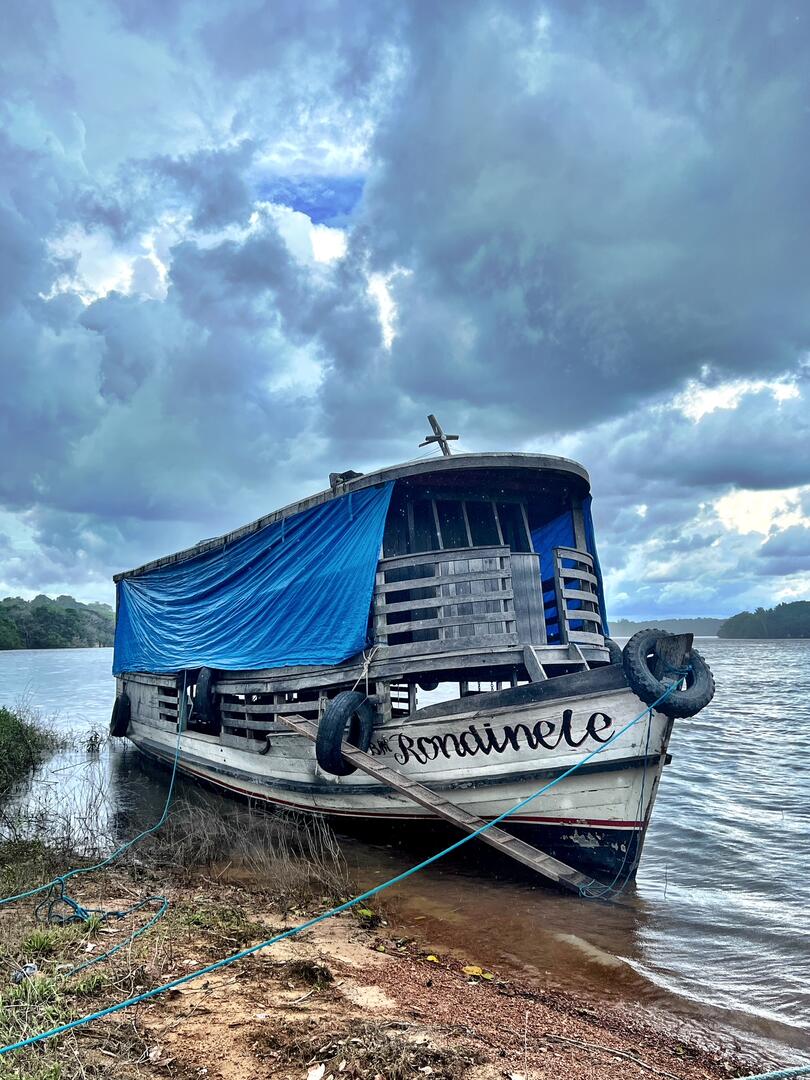
From Manaus we traveled to Oriximiná, a busy river town that feels like the last stop before the Amazon takes over. The next morning we loaded boxes of water filters, camping gear, and supplies onto a small aluminum boat and pointed the bow up the Trombetas River.
I don’t remember exactly how many hours the trip took. Time works differently on the river. Somewhere along the way conversation dies down, and everyone simply watches the shoreline slide past. Fishermen checked their nets from narrow wooden canoes, scarlet macaws crossed overhead in pairs, and every now and then pink river dolphins surfaced beside the boat before disappearing again as if they had imagined us instead of the other way around.
Campos would occasionally point out something hidden in the forest that I never would have seen—a nesting bird, a family of monkeys, or the entrance to a tiny creek that looked too small to lead anywhere. Campos, like myself, is an explorer at heart, and he seemed to notice things that the rest of us simply passed by. Everything seemed alive.
When we finally arrived, Braguinha was waiting for us on the riverbank. His handshake was firm, his smile even bigger, and within minutes he made us feel less like visitors and more like friends who had simply been away for a while.
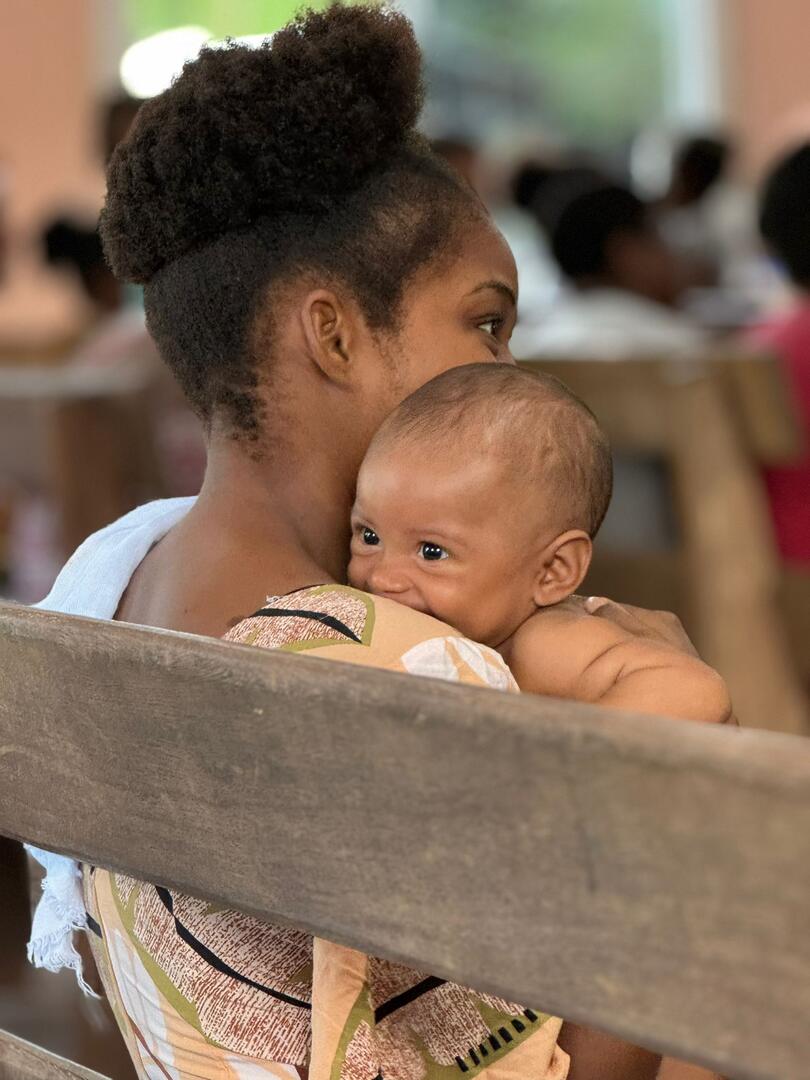
Over the next three years, Braguinha became my window into the community. He introduced us to families, translated when my Portuguese wasn’t good enough, laughed at my attempts to pronounce local names, and somehow knew every bend of the river and every person who lived along it.
Our days settled into a comfortable routine. We’d start early, before the heat became overwhelming, loading filters into smaller boats or carrying them from village to village. Every visit was different, so every visit required a little improvisation. Sometimes we were fitting a filter into an existing water system, and sometimes we were figuring things out as we went. The work itself wasn’t complicated. Getting everything—and everyone—to the right place often was.
One of the things I loved most was that nobody seemed to be in a hurry. There was always time to stop for coffee or a friendly meal, time to ask about someone’s family, and time to sit in the shade for a few minutes after distributing a filter. Some of the best conversations happened after the work was finished.
The Amazon, on the other hand, was in no mood to take it easy. The heat arrived early every morning and stayed until well after sunset, and the humidity wrapped around you like a wet blanket. Mosquitoes appeared with military precision every evening. We used plenty of insect repellent, but the mosquitoes treated it more like seasoning than a deterrent.
After a full day outside, the highlight wasn’t dinner. It was the shower.
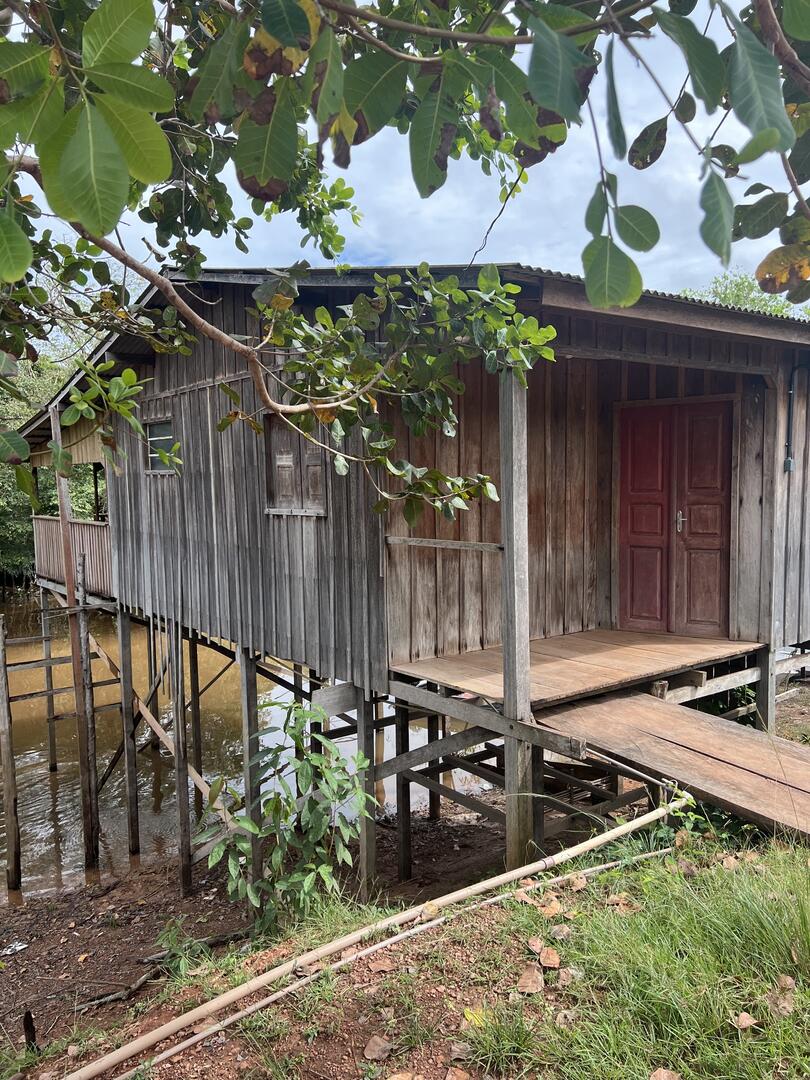
Calling it a shower might be generous. A small pump pulled water straight from the river into a pipe supported by a few wooden posts. There was no hot water, no tiles, and no privacy beyond a hanging tarp. It was wonderful.
I’ve stayed in beautiful hotels all over the world, but I honestly don’t remember many of their bathrooms. I remember every one of those river showers.
One evening Braguinha suggested we head over to his home on a small island in Lagoa Acari.
The lake was incredibly still, especially compared to the broad current of the Trombetas. A few members of the community cast their lines while the rest of us talked along the shore. Before long they were cleaning fish that had been swimming only minutes earlier. Dinner that night may have been the freshest meal I’ve ever eaten—fish cooked over an open fire, rice, farinha, and good conversation.
Nothing fancy. Nothing needed improving.
After dinner, someone asked if I wanted to go looking for caiman. That sounded like a much better idea before it got completely dark.
We climbed into a small boat with a spotlight and drifted quietly along the shoreline. The rainforest changes after sunset. The daytime birds disappear and the frogs begin, while insects create a constant wall of sound that somehow becomes normal after a while.
Braguinha swept the spotlight slowly across the water, and then I saw them—two orange eyes reflecting back at us. A few minutes later, another pair appeared, then another. The caiman hardly moved. They simply watched us before slipping silently beneath the surface. It was equal parts exciting and unsettling.
Back at camp, we slept in hammocks under nets. The first night I wasn’t convinced I’d get much sleep. By the third night I wondered why anyone bothered with beds. Lying there, gently rocking in the warm night air, I watched bats dart overhead catching insects while thousands of stars filled the gaps between the trees.
The forest never really goes quiet. It just changes shifts.
Somewhere, monkeys announced the coming morning long before sunrise. Birds joined in, and then somebody started making coffee. By then everyone was awake anyway.
Between jobs, Braguinha shared stories about the community. I had known the word “Quilombola” before arriving, but I didn’t really understand what it meant until I was there.
Centuries ago, enslaved Africans escaped into these forests and followed rivers like the Trombetas to places where they could build new lives beyond the reach of colonial authorities. They established communities deep within the Amazon, often alongside Indigenous peoples who shared their knowledge of the forest.
As Braguinha talked, I realized something that hadn’t occurred to me before. The river we traveled every day wasn’t just transportation. It was history.
Every bend, every narrow channel, and every quiet stretch of water had once offered hope to someone risking everything for freedom.
Returning the second year felt different. People remembered us. Children ran down to meet the boat before we even tied up. Families invited us inside to show us the filters we’d provided the previous year and proudly told us how much they appreciated having cleaner drinking water.
By the third year, it didn’t feel like returning to a project. It felt like returning to friends.
Looking back now, I realize I don’t think very often about the logistics, the equipment, or even the work itself. I remember Campos somehow making complicated travel plans look easy. I remember Braguinha’s patience and generosity. I remember the laughter over dinner, the fish from Lagoa Acari, the river showers, the mosquitoes that always seemed to find me, and lying awake in a hammock watching bats chase insects across a sky full of stars.
The water filtration project gave me a reason to travel to the Amazon. The people gave me a reason to come back.
Three years later, I still think about the Trombetas River. Not because of its size or its beauty—although it has plenty of both. I think about it because every time our boat rounded another bend, I was reminded that this river has carried very different travelers over the centuries. Some were escaping slavery in search of freedom. Others, like us, arrived hoping to help in a small way.
I hope we did.
Along the Trombetas River: Three Years with a Quilombola Community in the Brazilian Amazon
Copyright © 2026 by Jason Miller
All rights reserved. No part of this publication may be reproduced, distributed, or transmitted in any form or by any means, including photocopying, recording, or other electronic or mechanical methods, without the prior written permission of the publisher, except in the case of brief quotations embodied in critical reviews and certain other noncommercial uses permitted by copyright law.

