Jason Miller- Manaus Brazil
Whenever I think of remote cities steeped in history and adventure, my mind always drifts to Manaus, the capital of Amazonas, Brazil. Hidden deep within the Amazon rainforest, this remarkable city earned the nickname “Paris of the Tropics” during the rubber boom of the late nineteenth century. Even today, there is something almost surreal about finding such a grand city in the middle of the world’s largest jungle.
Long before I ever set foot there, Manaus had captured my imagination.
My fascination began in the mid-1990s when I stumbled across an old book about the Amazon Rubber Boom in a dusty used bookstore. I had never heard the stories before, and I was instantly hooked. During the boom years, roughly from 1879 to 1912, Manaus became one of the wealthiest cities on Earth. Rubber barons accumulated unimaginable fortunes, importing chocolates from the Netherlands, marble from Italy, furniture from Paris, and virtually anything else that could be purchased with money. Their lifestyles became legendary. Stories tell of horses being served champagne instead of water and extravagant parties that rivaled those of European aristocracy.
It seemed impossible that such wealth could have existed in the middle of the Amazon.
The prosperity, however, was short-lived. British explorer Henry Wickham secretly smuggled thousands of rubber tree seeds out of Brazil, eventually establishing vast plantations in British Malaya and Ceylon. Once Asian plantations began producing rubber more cheaply, the Amazonian economy collapsed almost overnight. Manaus fell into a depression from which it has never fully recovered, and the faded grandeur of that era is still visible throughout the city.
The city’s name itself carries a rich history. Manaus means “Mother of the Gods,” honoring the Manaós people, an Indigenous tribe who once lived along the banks of the Rio Negro and fiercely resisted Portuguese colonization. Although the Portuguese briefly renamed the settlement Cidade da Barra do Rio Negro, the original name was restored in 1856. Situated where the dark waters of the Rio Negro meet the muddy Solimões River, Manaus was destined to become a major trading center and gateway into the Amazon.
After dreaming about visiting for nearly twenty years, finally arriving in Manaus felt strangely familiar, as though I were walking into the pages of that old book that had first inspired me.
Anyone who knows me understands my love of history and architecture, and few places satisfy both passions quite like Manaus. I can spend entire days wandering through the old downtown streets, camera in hand, admiring crumbling facades that whisper stories of extraordinary wealth and faded dreams. Many of the magnificent mansions built during the rubber boom now stand abandoned, slowly surrendering to time, tropical rains, and creeping vines. Every time I pass one, I find myself imagining what it must have looked like at the height of its glory—and secretly wondering what it would be like to restore one into a home overlooking the Amazon.
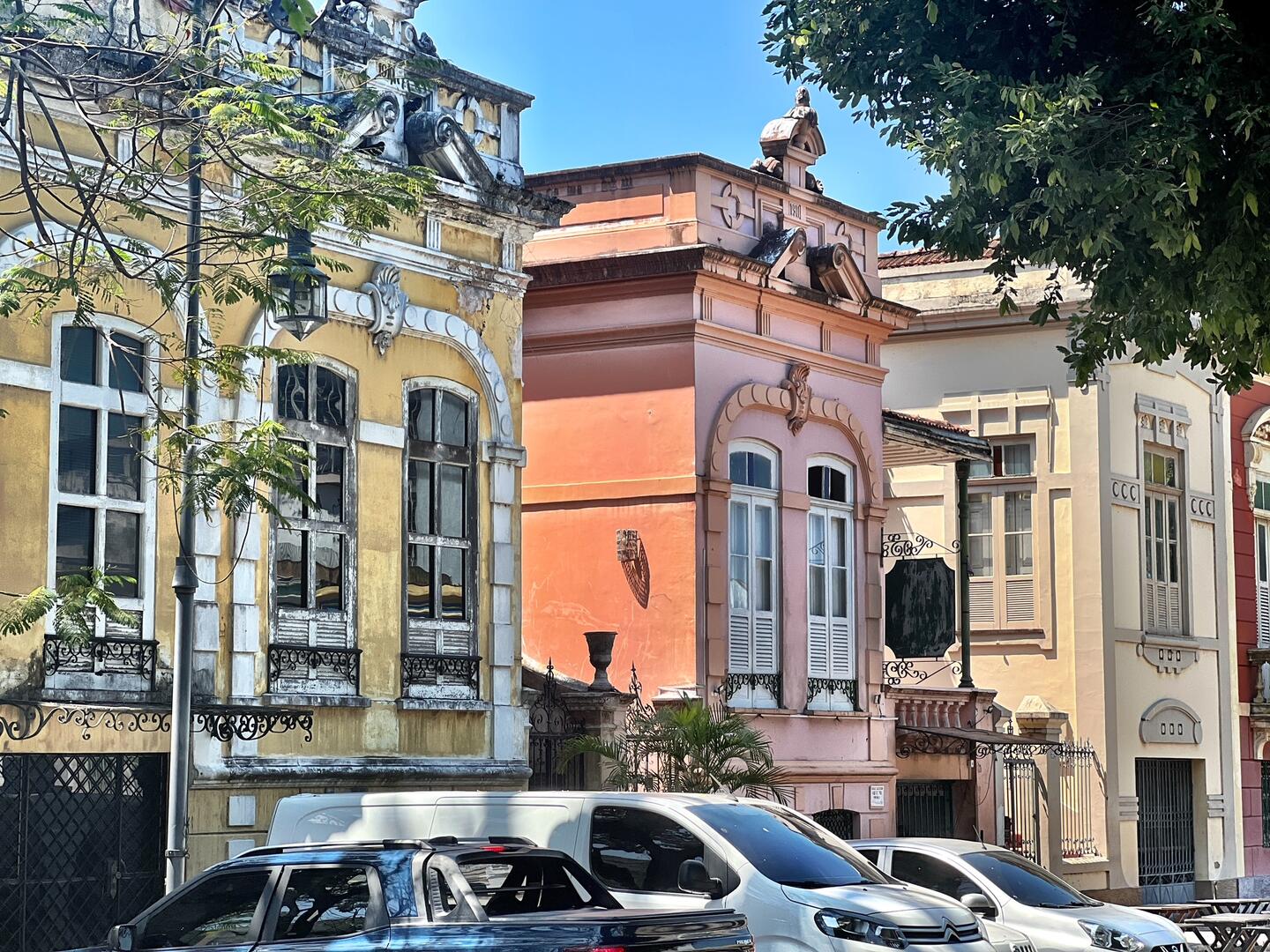
The architecture is remarkable. Even more than a century ago, these homes were masterpieces of engineering designed specifically for life in the rainforest. Massive masonry walls, soaring ceilings, enormous shuttered windows, and ingenious cantilevered roofs captured every possible breeze while keeping out the oppressive heat. Some restored homes still demonstrate these clever ventilation systems, and it’s easy to appreciate the brilliance of architects who designed comfortable living spaces long before air conditioning existed.
The crown jewel of Manaus is undoubtedly the Teatro Amazonas. Completed in 1897, it stands as a monument to the incredible wealth of the rubber era. Nearly every major building material was imported from Europe—Scottish steel, Italian Carrara marble, and colorful ceramic roof tiles from Alsace—all transported by steamship thousands of miles up the Amazon River from the Atlantic Ocean.
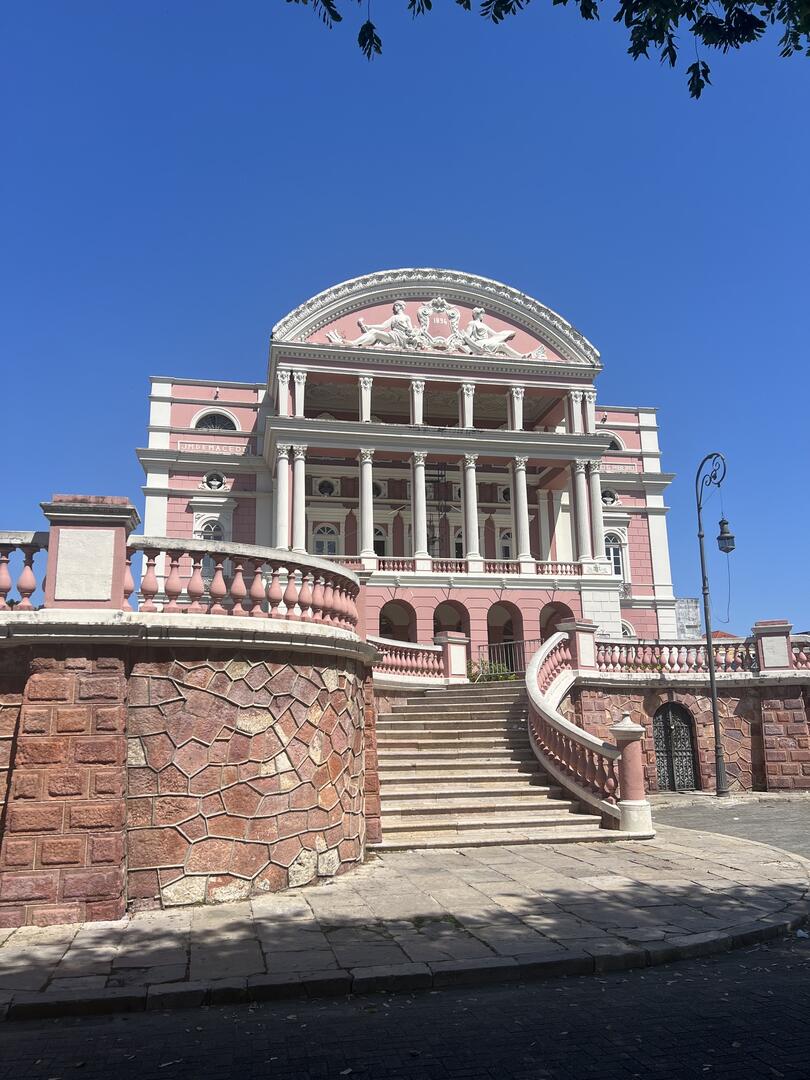
What impressed me even more than its beauty was its engineering. The theater sits on one of the city’s highest points behind an imposing retaining wall that protects it from seasonal flooding. During its construction, no surrounding building was allowed to rise above the theater’s foundation, preserving its commanding presence over the city. Beneath the elegant seats lies an astonishing feat of nineteenth-century engineering: a system of culverts and masonry ducts that captured the cool evening breeze from the river and funneled it beneath the audience, creating a natural air-conditioning system decades before electricity became commonplace.
Standing inside the theater, it is impossible not to marvel at the vision and ambition of the people who built it.
Thankfully, each time I return to Manaus, I notice signs of renewal. The square surrounding the theater has become increasingly vibrant, with beautifully restored buildings now housing boutique hotels, cafés, and restaurants filled with locals and visitors alike. Yet hundreds of architectural treasures still wait patiently for restoration. One can only imagine how breathtaking the city will become if that work continues.
Manaus has a personality unlike anywhere else I have visited. Despite being a city of more than two million people, it still possesses the feeling of a frontier town. Isolated from the rest of Brazil—reachable only by airplane or riverboat—it has developed a close-knit atmosphere where people genuinely seem to look out for one another.
The nightlife reflects that warmth. Music spills from restaurants late into the evening, families gather in public squares, and conversations linger well after dinner. The people are welcoming and relaxed, and I always enjoy the opportunity to practice my Brazilian Portuguese. English is rarely spoken here, but honestly, why should it be? You’re deep in the Amazon, and learning even a little Portuguese opens doors to countless friendly conversations.
Twice I have been fortunate enough to find myself in Manaus during Carnaval. For several unforgettable days the city transforms into one continuous celebration. Streets fill with music around the clock, elaborate costumes, dancing, and colorful parades. The energy is contagious, and despite the enormous crowds, I have always felt safe. More than once complete strangers have happily pointed me in the right direction or offered assistance without being asked.
Some of my favorite memories come after sunset. Seen from the air, Manaus appears like a brilliant island of light surrounded by an endless sea of darkness. Whether arriving aboard a commercial flight or flying in myself, the city glows against the black expanse of the rainforest, reminding me just how isolated this remarkable place truly is.
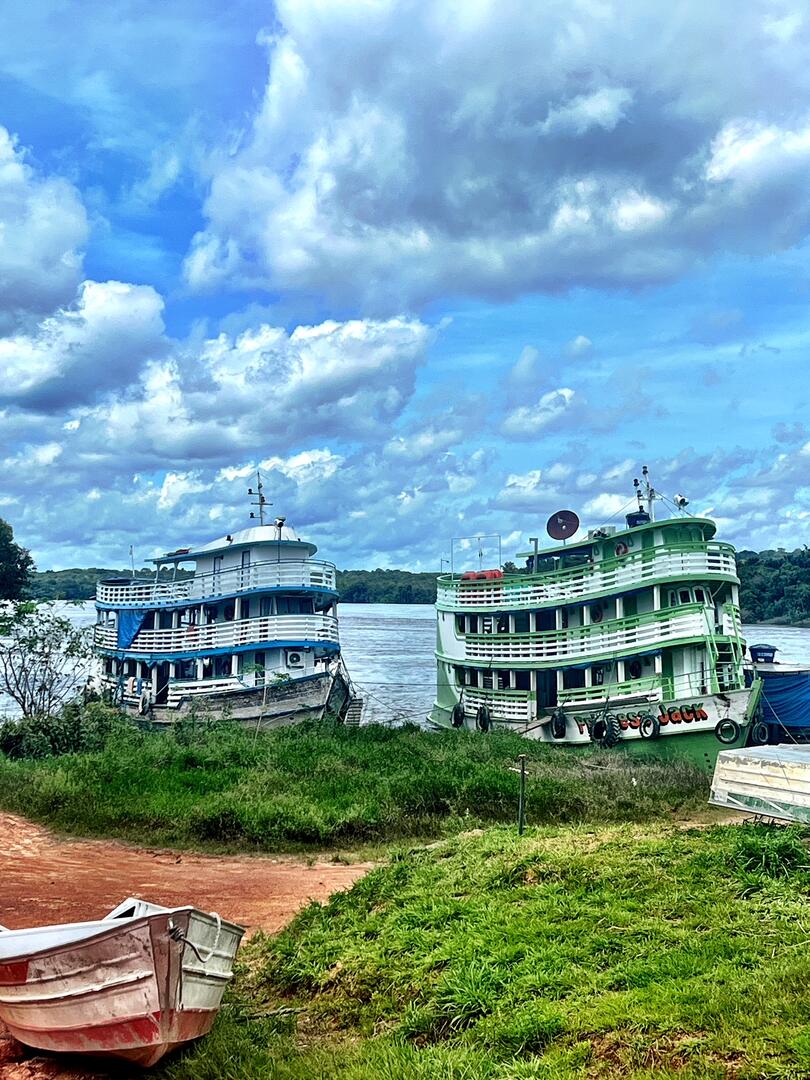
Along the riverfront, thousands of boats line the shores—from simple dugout canoes carved from single tree trunks to enormous three-story wooden riverboats painted in bright colors, their Brazilian flags fluttering in the humid breeze. Many of my own adventures into the Amazon have begun aboard these vessels, departing from the bustling docks and disappearing into a maze of rivers that stretch for thousands of miles.
Although Manaus retains much of its historic charm, it is also a thoroughly modern city. For work, I visit at least twice each year, often sourcing equipment and supplies that would surprise many people to find in the middle of the rainforest. Modern shopping malls rival those found in North America, and local businesses have always been friendly, resourceful, and easy to work with.
Every visit reminds me why I fell in love with Manaus long before I ever saw it. It is a city of contrasts—grand yet weathered, isolated yet welcoming, steeped in history while constantly reinventing itself. Yes, the heat is relentless and the tropical rains can arrive without warning, but those are simply part of its character.
For me, Manaus is far more than a destination. It is a city where history still echoes through every street, where adventure begins at the river’s edge, and where I always feel, somehow, completely at home.
Paris of the Tropics
Copyright © 2026 by Jason Miller
All rights reserved. No part of this publication may be reproduced, distributed, or transmitted in any form or by any means, including photocopying, recording, or other electronic or mechanical methods, without the prior written permission of the publisher, except in the case of brief quotations embodied in critical reviews and certain other noncommercial uses permitted by copyright law.

