Jason Miller -Lake View Campground Colorado
Tuesday, May 19, 2026 – 2:43 A.M.
Sleep wasn’t coming easy. I lay beneath a mosquito net in a small roadside hotel room somewhere in western Uganda, the air thick with heat and humidity. The tiny fan in the corner was losing its battle against the night, and my phone sat charging on a counter across the room while trucks occasionally rumbled along the highway outside. Our trip had only just begun.
Every few years we make the same circuit through East Africa, checking on nonprofit projects and visiting partner organizations. This time the plan was ambitious: north to Kasese, east across Uganda, then onward to Kampala and Jinja before flying into Kenya. Earlier that day we had left Kigali, Rwanda, after visiting a refrigeration training organization that teaches students the science and trade of industrial cooling systems. It had been a long day on the road, and exhaustion should have carried me straight to sleep.
Instead, my phone kept vibrating.
At first I ignored it. Then it buzzed again, and a few minutes later it buzzed again. Soon the sound seemed unnaturally loud in the darkness. Finally, irritated and half-asleep, I crawled out from beneath the mosquito net and crossed the room. The mosquitoes immediately seized the opportunity, circling me like tiny vultures. I grabbed my phone and squinted at the screen.
Within seconds, I was fully awake.
I always register my travel plans with the embassy, and during most trips that means the occasional security update or travel advisory. Tonight was different. Very different. There were dozens of missed alerts. Fumbling for my glasses, I started reading.
The first message advised travelers to avoid the Uganda-Rwanda border region. Reports were emerging of a new Ebola outbreak in the Democratic Republic of Congo, and Rwanda was reportedly considering closing portions of its borders with both the DRC and Uganda.
My stomach tightened.
The next messages were from colleagues back home. The United States was discussing enhanced screening procedures and possible quarantine requirements for travelers who had recently visited Uganda, the DRC, or South Sudan. I stared at the screen. South Sudan wasn’t an issue—I hadn’t been there in over a month—but Uganda was another story.
We were already here.
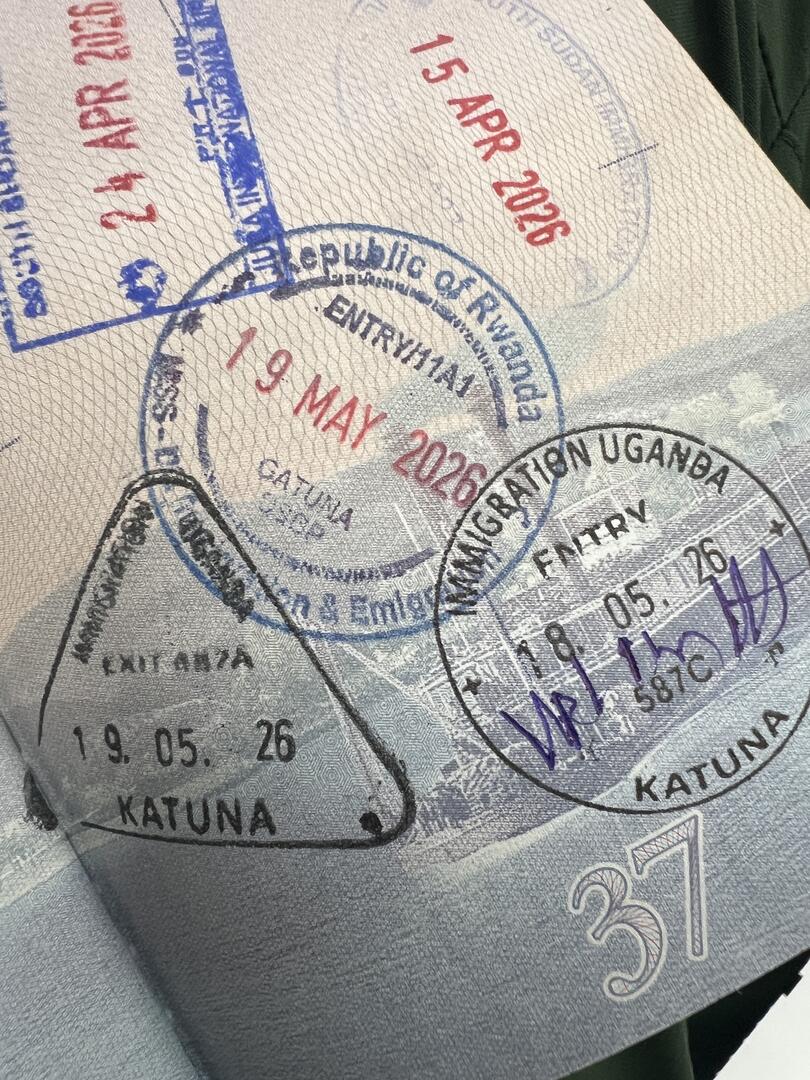
In fact, we had crossed the border only yesterday. Fresh immigration stamps sat neatly in our passports as proof.
What made the news particularly unsettling was our location. Kasese, one of our upcoming destinations, sat uncomfortably close to western Uganda—far too close for comfort when viewed on a map. As the crow flies, we weren’t that far from the emerging outbreak zone.
For the first time that trip, I wasn’t thinking about missed flights or delayed schedules. I was thinking about borders slamming shut. If Rwanda closed crossings from Uganda, we could find ourselves trapped. Depending on the size of the outbreak, that could mean weeks, or longer.
I got dressed and stepped outside into the cool darkness. Somewhere nearby was my travel partner, Phil. I wasn’t entirely sure which room was his, but as fate would have it, he wasn’t sleeping either.
“Phil?” I called quietly.
A voice answered immediately, and he stepped out of the darkness. Unlike me, he hadn’t had Wi-Fi access and knew nothing about the alerts. I showed him the messages, and the color drained from his face.
For the next several minutes we stood under the dim hotel lights discussing possibilities. Every option seemed to carry some kind of risk. Continue north and hope for the best? Turn around? Wait for more information? Eventually we reached the same conclusion. Neither of us wanted to be trapped in Uganda if the situation escalated overnight. If we had to spend weeks waiting somewhere, we’d much rather do it in Rwanda.
The decision was made.
We would leave immediately.
Within minutes we were knocking on doors, waking our companions and explaining the situation. Sleepy confusion quickly turned into urgency as bags were repacked in the dark. Then came the challenge of finding our driver.
An hour later we were rolling south through fog-covered roads toward the border. No one spoke much. The closer we got, the more one question occupied everyone’s mind: had we already waited too long?
Nobody knew how quickly the news was spreading, and nobody knew whether Rwanda had already begun restricting crossings. The eastern sky was just beginning to lighten when we finally arrived. It was nearly five in the morning, and the border was still open.
A collective sigh filled the van.
But relief was short-lived.
Overnight, Ebola screening stations had appeared along the crossing. White tents lined the roadway while health officials moved between travelers carrying clipboards, thermometers, and boxes of protective equipment. Temperatures were taken, questions were asked, and bags were searched again and again. The seriousness in everyone’s voice was impossible to ignore. Something had changed overnight, and for the first time the outbreak no longer felt like distant news happening somewhere else.
It felt very, very close.
Back and forth we went between checkpoints. I watched one customs official wearing bright blue latex gloves inspect bag after bag after bag—food, clothing, produce, personal items—without ever changing them. When he reached into my toiletry kit and thumbed through my toothbrush, I made a mental note: throw that away immediately.
The border agents did little to calm anyone’s nerves. They spoke of rumors—rumors of sick travelers, rumors of people attempting to cross into Rwanda seeking treatment, and rumors of others fleeing western Uganda before restrictions tightened. Whether true or not, the effect was the same. The situation suddenly felt very real.
One officer asked whether we had been around crowds. I thought about the previous day. Hundreds of schoolchildren had surrounded us at a private school. They danced, laughed, grabbed our hands, and insisted on hugs and photos.
“Yes,” I admitted.
Another officer asked where we had eaten. That answer wasn’t much better. The previous evening we had attended dinner with a generous local host who had invited many of the town’s leaders. We had spent hours shaking hands, sharing stories, and eating local food together.
Then came the question: “Have you been around anyone sick?”
Not that we knew of.
But the local doctor had attended the dinner.
That suddenly seemed significant.
A few hours later we sat safely inside our van on the Rwanda side of the border, staring at our passports. Two stamps. One entering Uganda and one leaving less than twenty-four hours later. The clock had started.
Twenty-one days.
If everything went well, we would simply wait it out. If it didn’t, well, nobody wanted to think about that.
We decided the safest place to spend the next several days was at a friend’s farm in rural Rwanda. It was isolated, peaceful, and far from crowds. If we had unknowingly been exposed to something, it seemed like the responsible place to stay.
The challenge was that I still needed to be in Kenya within a week for important work commitments. I also found myself questioning the twenty-one-day monitoring period. Local health officials repeatedly stated that symptoms generally appeared much sooner after exposure. Still, twenty-one days was the standard, and nobody wanted to take chances.
Back home, only two people knew what was happening. My wife immediately entered panic mode. My father, meanwhile, responded exactly as expected. He reminded me—again—that he had always considered my travel habits somewhat reckless.
The truth was that we had no warning. We learned about the outbreak only after arriving.
Days 2–3
Everything seemed normal.
We stayed at the farm and worked remotely.
As more information became available, we learned that U.S. citizens could still return home, though enhanced screening procedures were being implemented. Rwanda also chose not to close its border with Uganda, though restrictions with the DRC tightened.
Day 4
Still healthy.
We decided to continue to Nairobi. Ironically, I woke up with a headache and some body aches. Of course, I almost always have a headache while traveling. By lunchtime all of us were joking that we had contracted a severe case of hypochondria. After all, it was Day Four, and every minor symptom suddenly seemed important.
At the airport, Kenyan health officials had us complete online health-tracking forms before boarding. We happily complied. The last thing any of us wanted was to become part of the problem.
Meanwhile, calls home became increasingly stressful. American news coverage was intense, with reports of deaths, outbreak zones, and worst-case scenarios dominating the headlines. My wife was carrying the burden alone. She couldn’t really discuss it with friends or tell our children without causing unnecessary alarm.
I promised her that I would remain in Africa until I was absolutely certain I posed no risk before coming home.
Days 5–9
Nothing.
No symptoms.
No fevers.
No illness.
One of our colleagues decided he had seen enough excitement and returned home immediately.
The rest of us waited.
Day 10
I traveled into Maasai country in southern Kenya. Instead of flying, I drove. There were wide-open spaces, almost no people, and plenty of time to think.
Every day I received texts from Kenya’s health department. If I didn’t respond quickly enough, they called. Rumors of Ebola spreading to Kenya circulated constantly, but each suspected case continued to test negative.
Political controversy erupted after Kenya announced plans for a specialized Ebola treatment facility, and protests followed. I was grateful to be far from the cities and away from the chaos.
Days 11–12
Still healthy.
Back home, the news remained grim. Experts were discussing transmission risks, vaccine limitations, and concerns about the specific strain involved. Every headline seemed worse than the last.
Day 13
I finally booked my flight home.
Because of changing travel requirements, I had to reroute through one of the designated CDC screening airports.
Day 14
Leaving Nairobi proved more complicated than expected. Before I could even enter the terminal, my passport was flagged because of my brief stay in Uganda. There were questions, more forms, and more interviews. The same thing happened at the ticket counter and then again before boarding.
I felt completely fine. Otherwise, I would have stayed.
I was informed that CDC personnel would meet me upon arrival in Atlanta.
That got my attention.
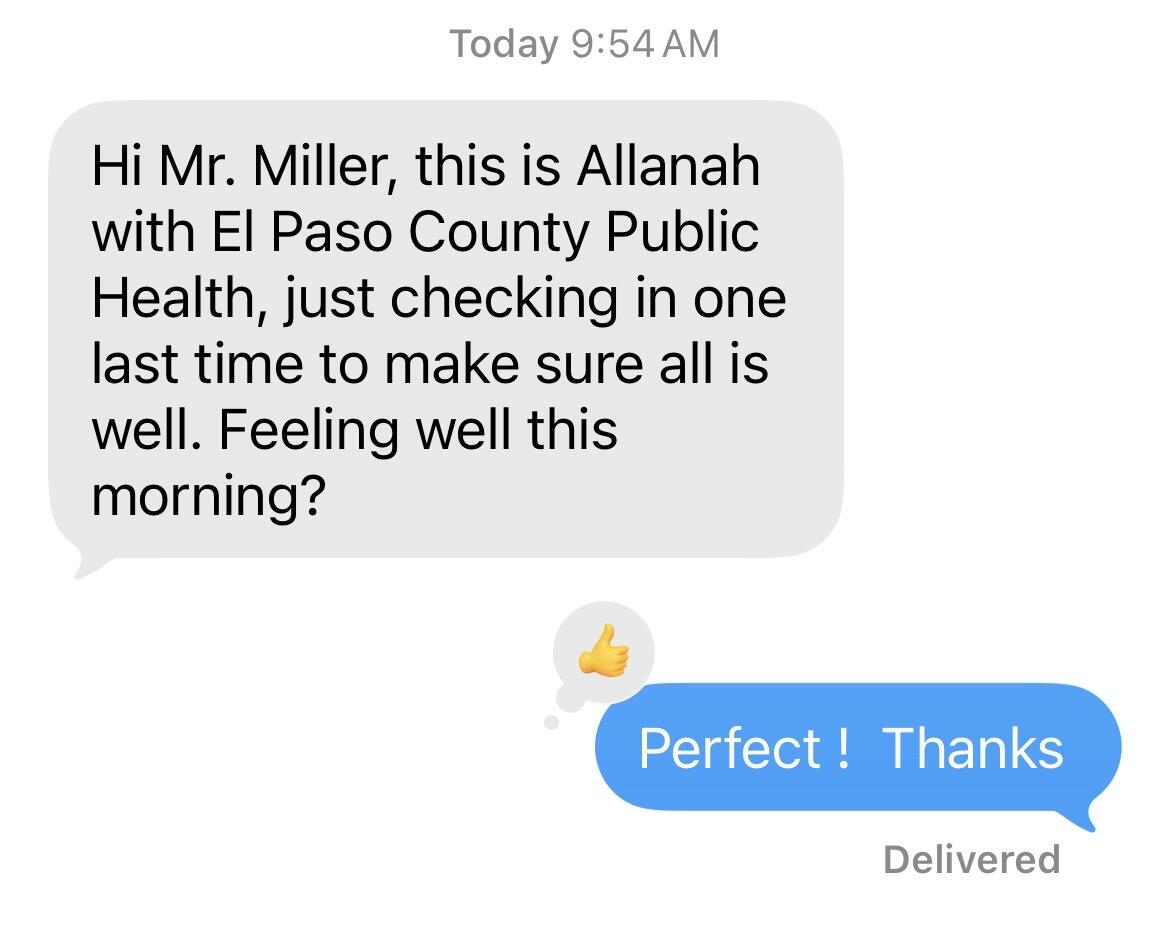
Day 16
After roughly twenty-five hours of travel, I landed in Atlanta. As promised, CDC personnel were waiting. I was escorted into a room where several staff members wore disposable protective suits, masks, and face shields. They couldn’t have been friendlier.
For nearly an hour they asked detailed questions about every location I had visited, every meal I had eaten, and every interaction I had in Uganda. They checked my temperature, blood pressure, and overall health. By the end of the interview, I was exhausted but relieved.
Then came one final surprise.
After clearing immigration, I discovered I wasn’t allowed to board my connecting flight home. Apparently, I hadn’t been properly released in the system. A few phone calls and some frantic coordination eventually solved the problem, and I finally arrived home late that evening.
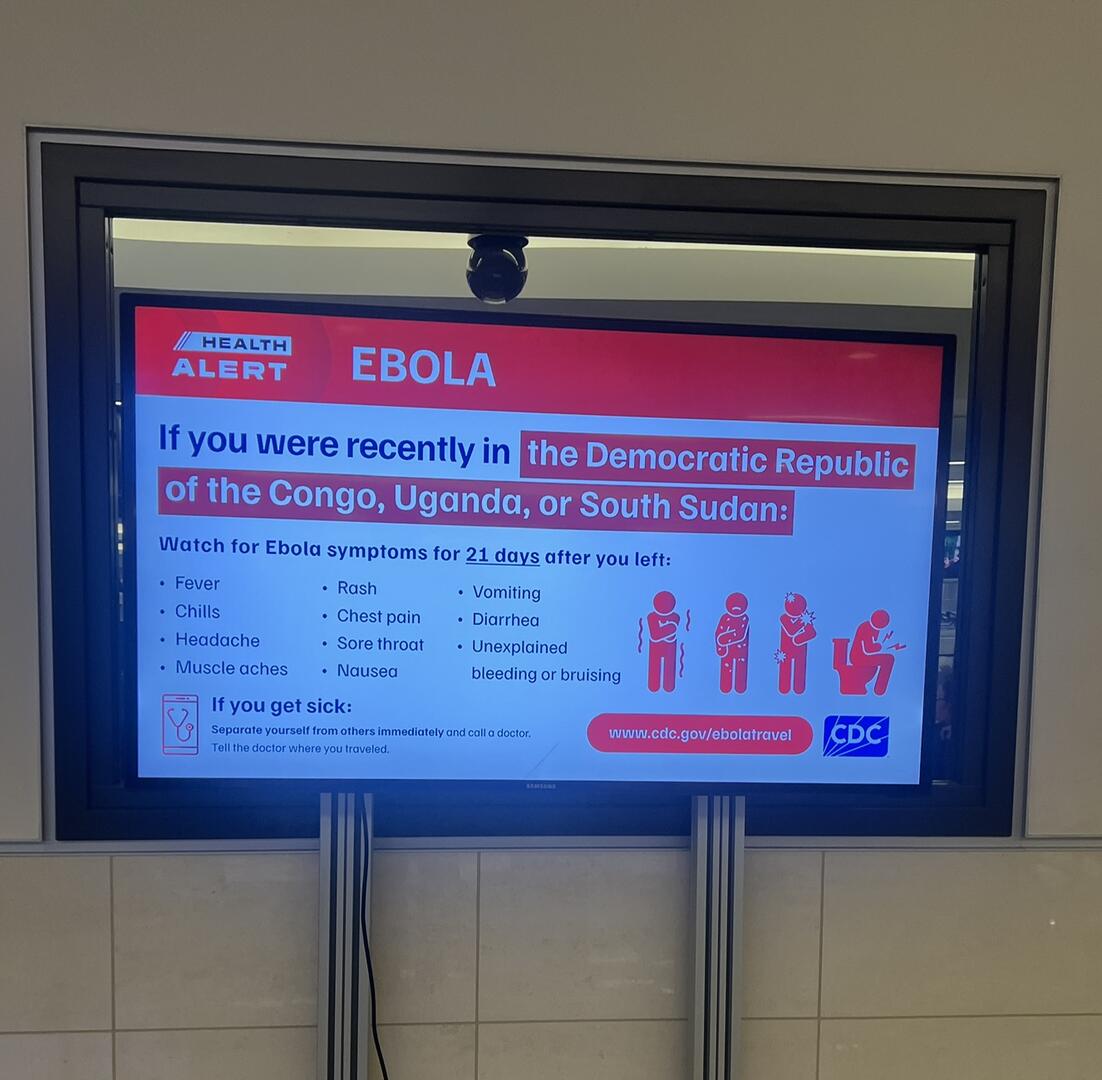
The next morning, the El Paso County Health Department called. Another interview. Another hour of questions. Soon afterward, the Colorado State Health Department called as well. Everyone was professional, helpful, and surprisingly reassuring.
They requested that I avoid unnecessary travel.
I informed them that I planned to spend several days camping in the mountains.
Which is exactly what I did.
Every day a text message arrived asking how I felt. Every day I responded:
Fine.
And then, finally—
Day 21
The text arrived. The monitoring period was over.
No symptoms.
No illness.
No emergency.
Just relief.
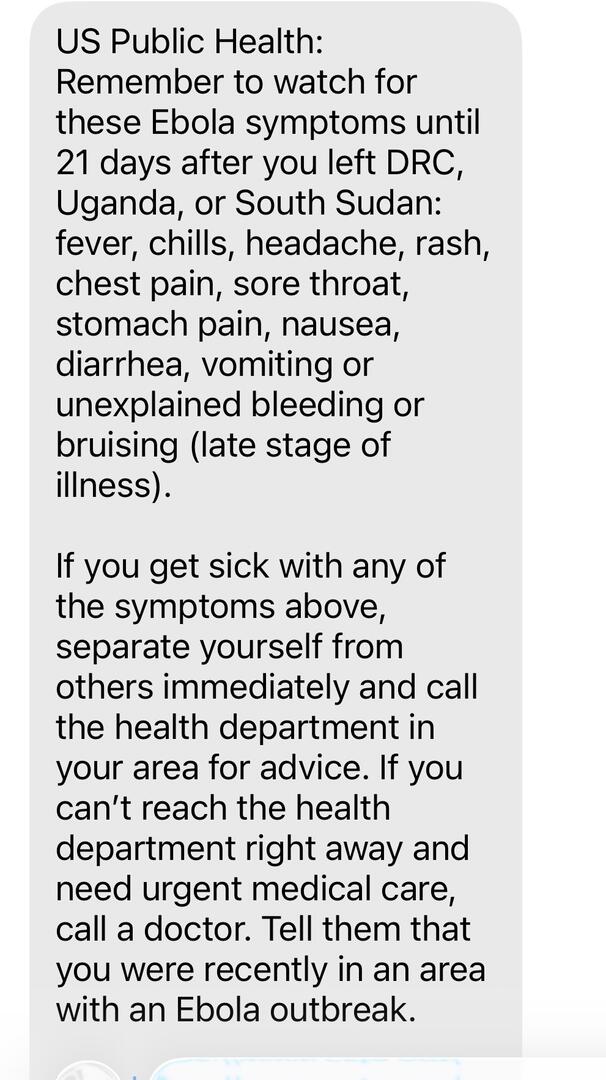
Relief for me. Relief for my family. Relief that what had become twenty-one days of uncertainty, fear, rumors, screenings, interviews, and endless “what ifs” had ultimately been nothing more than a frightening inconvenience.
For many people affected by Ebola outbreaks, the story is far more serious. For us, thankfully, it ended with a lesson in how quickly a distant crisis can become very personal when you’re standing on the wrong side of a border.
.
Ebola- 21 days and counting
Copyright © 2026 by D. Jason Miller
All rights reserved. No part of this publication may be reproduced, distributed, or transmitted in any form or by any means, including photocopying, recording, or other electronic or mechanical methods, without the prior written permission of the publisher, except in the case of brief quotations embodied in critical reviews and certain other noncommercial uses permitted by copyright law.

