Originally written in 2008- updated -2020 – Jason Miller
Hanging on the wall of my office is an authentic Nandi spear from East Africa, forged sometime around the turn of the twentieth century. It was a gift from a remarkable man and dear friend, a man who devoted much of his life to protecting the Efe Pygmies of the eastern Congo and preserving their culture for future generations.
That man was Jean-Pierre Hallet.
The spear is more than a historical artifact. It is a reminder of a friendship and of one of the most extraordinary lives I have ever encountered. Jean-Pierre was an explorer, conservationist, adventurer, collector, humanitarian, and storyteller. He assembled one of the world’s finest collections of African artifacts, much of which eventually found its way into museum collections, including exhibits associated with UCLA. Yet despite all of his accomplishments, it was his compassion for Africa’s people that defined him.
But I am getting ahead of myself.
In the early 1990s, I worked for Tandy Corporation in downtown Fort Worth, Texas. Although I had never set foot in Africa, the continent consumed my imagination. I spent every spare moment reading about its history, cultures, wildlife, and explorers. During my lunch breaks, I would walk several blocks to the legendary Barber’s Book Store on Throckmorton Street.
Founded in 1925, Barber’s housed tens of thousands of used and out-of-print books. To me it was paradise. I spent countless afternoons wandering dusty aisles searching for forgotten volumes on Africa. Money was tight in those days, so I often had to choose carefully which books I could afford. More than once I discreetly moved a particularly desirable volume to a hidden corner of the shelf, hoping it would remain there until payday.
One book continually drew my attention.
Its title was Congo Kitabu. At the time I was teaching myself Kiswahili and knew that “kitabu” meant “book.” What made the volume especially intriguing was that it had been personally signed by the author, Jean-Pierre Hallet. Because of the autograph, it was priced beyond my modest budget, so I would pull it from the shelf, browse a few pages, admire the inscription, and reluctantly return it.
I had no idea that the man who wrote that book would one day become a close friend, or that our lives would become unexpectedly connected.
To understand Jean-Pierre Hallet, one must begin on the shores of Lake Kivu in the 1920s.
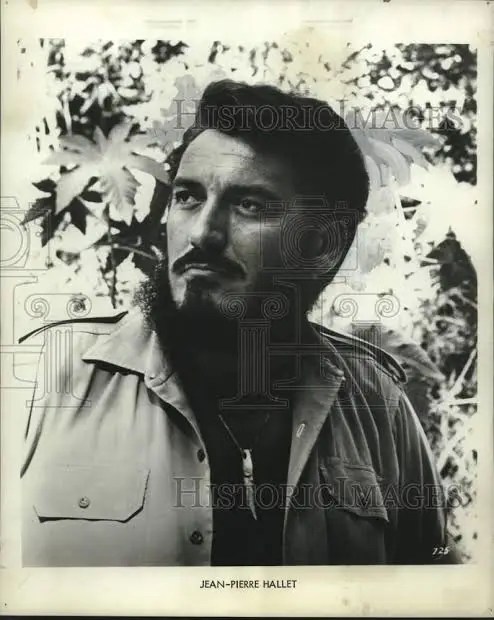
His father, André Hallet, was a renowned Belgian painter celebrated for his vibrant depictions of African life and landscapes. Living among the people of what was then Ruanda-Urundi, André immersed himself in local culture and developed close relationships throughout the region. His work would eventually be displayed in museums around the world.
When André’s wife became pregnant, medical concerns prompted her return to Belgium for the birth. It proved fortunate. On August 4, 1927, Jean-Pierre Hallet entered the world weighing an astonishing fourteen pounds. Friends would later joke that he arrived larger than life and remained that way throughout his seventy-seven years.
Although born in Belgium, Africa became his true home.
Raised along the shores of Lake Kivu, Jean-Pierre grew up among African children, speaking Kingwana fluently and embracing village life as naturally as any local boy. The landscapes, wildlife, and people of Central Africa shaped him from an early age. He learned far more eagerly from the forests, lakes, and villages around him than he ever did from a classroom.
His independent spirit quickly became apparent.
School held little attraction compared to the adventures waiting beyond the village. He often disappeared for days at a time exploring the countryside, returning home to worried parents. He stubbornly resisted authority and reportedly refused to speak French, preferring the language of his African friends.
Eventually his parents concluded that their adventurous son required a more structured education. At only six years old, Jean-Pierre was sent back to Belgium. Leaving Africa was heartbreaking. He departed the only home he had ever known: the dusty roads, the shores of Lake Kivu, the wildlife, and the close friendships that had defined his childhood.
Yet Africa never released its hold on him.
As he grew into a young man, Europe descended into war. During World War II, after Belgium fell to Nazi occupation, the teenage Jean-Pierre joined the Belgian Resistance before serving in the Belgian Army. Even at sixteen he was already physically imposing, standing well over six feet tall.
When the war ended, his thoughts immediately returned to Africa.
After studying agriculture, he joined the Belgian colonial administration as an agronomist and returned to the Congo in 1948. Unlike many colonial officials, Jean-Pierre immersed himself in local communities. He traveled primarily on foot, rejected the practice of being carried by porters, stayed in villages whenever possible, learned local languages, and shared meals with the people he served.
His willingness to live among ordinary Africans earned their trust but often created friction with colonial authorities.
One incident became emblematic of his character. Witnessing a colleague flogging African workers, Jean-Pierre intervened immediately despite the risk to his own career. Such confrontations became common throughout his service. He challenged practices he considered unjust and consistently advocated for the people among whom he lived.
His travels often carried him deep into remote regions where danger was a constant companion.
During one expedition he suffered a severe knife wound while intervening in a village dispute. Refusing to report the incident, he treated the injury himself in order to shield the villagers from punishment. The wound healed poorly in the tropical climate, weakening him physically just as malaria struck.
Soon he was fighting for his life.
Stranded far from medical care and suffering from both malaria and the dreaded Blackwater Fever, Jean-Pierre drifted in and out of consciousness. Villagers eventually carried him for days through forests, rivers, and valleys until they reached a road where a passing truck transported him to safety.
Against all odds, he survived.
Years later, during a famine, his determination to help local communities nearly cost him his life again. While using explosives to harvest fish from Lake Tanganyika to feed starving villages, a stick of dynamite detonated prematurely. The explosion destroyed his right hand and inflicted devastating injuries.
Most men would have died.
Instead, Jean-Pierre fashioned a tourniquet, found his truck, and somehow drove himself for hours across remote African roads to reach medical care. He survived yet another ordeal that would have ended almost anyone else’s story.
But perhaps the most important chapter of his life began not with adventure, but with compassion.
While traveling through the forests of the eastern Congo, Jean-Pierre encountered the Efe Pygmies. He witnessed firsthand the discrimination, exploitation, and neglect they endured from both neighboring groups and government authorities. Deeply moved by their situation, he dedicated himself to their protection.
What followed became his life’s greatest mission.
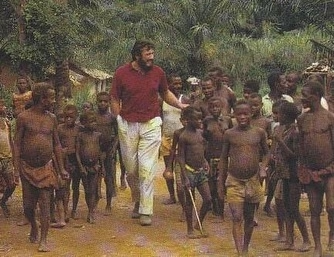
He established the Pygmy Fund, purchased land intended to protect traditional forest territories, raised awareness internationally, produced documentaries, and organized expeditions that brought supporters from around the world to witness the challenges facing these remarkable people.
While many remember Jean-Pierre as an adventurer, he would probably have preferred to be remembered as an advocate.
My own connection to him began unexpectedly on Valentine’s Day in 1995, when my girlfriend—who later became my wife—surprised me with a copy of Congo Kitabu. She had purchased it from Barber’s Book Store in downtown Fort Worth. It was the very book I had admired for months, complete with the author’s signature.
I read it cover to cover.
Jean-Pierre’s writing captured everything that fascinated me about Africa: its landscapes, wildlife, cultures, dangers, and endless possibilities. The stories seemed almost unbelievable, yet they reflected a life genuinely lived at the edge of adventure.
Near the end of the book I discovered that Jean-Pierre had eventually settled in California.
A thought occurred to me.
Could he still be alive?
Could I somehow find him?
This was before the internet made such searches easy. Armed with little more than a telephone and determination, I began calling museums, organizations, and anyone who might know his whereabouts. After numerous dead ends, I finally reached someone who informed me that Jean-Pierre was alive and operating an African import business in Santa Monica.
Eventually I made the trip to California.
We met, talked for hours, and immediately discovered a shared passion for Africa. During that first visit he presented me with a gift I still treasure today: a Nandi spear he had personally brought back from Africa decades earlier.
That spear remains on my office wall.
Over the next several years we stayed in touch. Whenever I visited California, I spent time with him at his Malibu home overlooking the Pacific Ocean. The house itself reflected a lifetime of exploration. Every room seemed filled with African artifacts, books, notes, photographs, and memories gathered over decades.
Jean-Pierre was impossible to forget.
With his long white beard, commanding presence, and endless stories, he seemed to belong to another era. He represented one of the last surviving links to a generation that had experienced Africa in ways that can never be repeated.
When I moved to South Africa in 1997, he encouraged me to keep him informed of my travels. I regularly sent postcards and letters describing my experiences, and whenever possible I sought his advice.
Even in his later years, his greatest concern remained the Efe Pygmies.
The Ituri Forest had become engulfed by conflict, making visits increasingly difficult. Jean-Pierre worried constantly about the people he had spent decades trying to help. He never stopped advocating for them and spoke passionately about their future whenever anyone would listen.
On New Year’s Day 2004, I learned that Jean-Pierre Hallet had passed away at the age of seventy-seven.
With him, an era seemed to disappear.
I consider myself fortunate to have known him, listened to his stories, and shared in his passion for Africa. Nearly every year I pull Congo Kitabu from my shelf and reread portions of it. Because my own travels have taken me through many of the same regions he once explored, I often find myself tracing his footsteps across maps and landscapes.
In recent years my work has brought me near Lake Kivu and the Ituri Forest. One of my enduring hopes is to discover what became of the lands Jean-Pierre acquired through the Pygmy Fund. Were they preserved? Do they still benefit the people he worked so hard to protect?
I have reached out to his family and former associates seeking answers. So far, little information has surfaced, and much of the history surrounding the organization appears to have been lost.
Yet I remain hopeful.
Somewhere within the forests of Central Africa, traces of Jean-Pierre Hallet’s legacy undoubtedly remain. Perhaps one day I will find them.
Until then, the old Nandi spear hangs quietly on my wall—a reminder of an extraordinary man whose life was devoted not only to adventure, but to the people he loved.
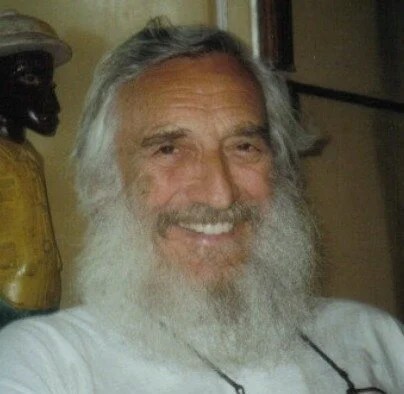
Jean Pierre Hallet
Copyright © 2020 by D. Jason Miller
All rights reserved. No part of this publication may be reproduced, distributed, or transmitted in any form or by any means, including photocopying, recording, or other electronic or mechanical methods, without the prior written permission of the publisher, except in the case of brief quotations embodied in critical reviews and certain other noncommercial uses permitted by copyright law.

