Jason Miller- Written on a quiet evening camping in the Rockies.
Africa is a big place. That statement sounds obvious until you find yourself staring across an endless horizon where the land seems to stretch on forever. Vast grasslands, sprawling deserts, dense jungles, and landscapes so immense they make you feel very small. Yet despite its size, Africa is changing. Population growth over the last thirty years has been staggering, and I often wonder what these wild places will look like thirty years from now.
For now, however, Kajiado remains gloriously open.
The brushland stretches as far as the eye can see, interrupted only by rocky hills, winding rivers, and the occasional acacia tree stubbornly defying the heat. Most days are hot, dry, and dusty, but there is a rugged beauty to the land. This is Maasailand, historically and presently home to the proud Maasai people. I have written elsewhere about my years working alongside the Maasai, so I won’t dive deeply into those experiences here. Instead, this story is about building a base camp in one of the most remote corners of their land.
The organization I work for was offered a five-year opportunity to operate in Kajiado. Given the size of the region—roughly 7,500 square miles—it quickly became obvious that we would need more than a few vehicles and a lot of optimism. We needed a permanent base camp and, perhaps more importantly, a runway.
As project manager, that challenge landed squarely on my desk.
Remote projects have a unique way of turning simple ideas into complicated adventures. There are logistical hurdles, government permissions, cultural considerations, negotiations with local chiefs and community leaders, vehicle breakdowns, and the unfortunate realities of corruption and theft that can plague projects in remote areas. Every solution seems to create two new problems.
Our project area lay south of Lake Magadi and only about fourteen miles north of the unofficial Tanzanian border. During the planning stages, we established a small airstrip near Shampole so we could regularly fly into the area and meet with Maasai leaders about where and when our work would take place.
We flew in aboard small Cessna aircraft, bouncing onto our rough grass strip. Occasionally, larger teams arrived overland in caravans of dusty vehicles that looked as though they had just completed a rally race.
For more than a year we made the long drive from Nairobi, exploring the region, visiting bomas and villages, meeting elders, and hiring local workers. Countless hours were spent crossing rough tracks that could generously be described as roads. We learned quickly that distances in Africa are measured less in miles and more in hours, tire punctures, and unexpected delays.
Eventually, after much debate, it was decided that the base camp should be located farther north. The location was more central to our operational area and would make supply deliveries from Nairobi considerably easier.
The chosen site sat just south of a small town of Oloika, on a broad flat plain perfect for an airstrip. Nearby, a slight rise in the landscape provided an ideal location for the camp itself. About four kilometers away, a seasonal river basin held water for most of the year.
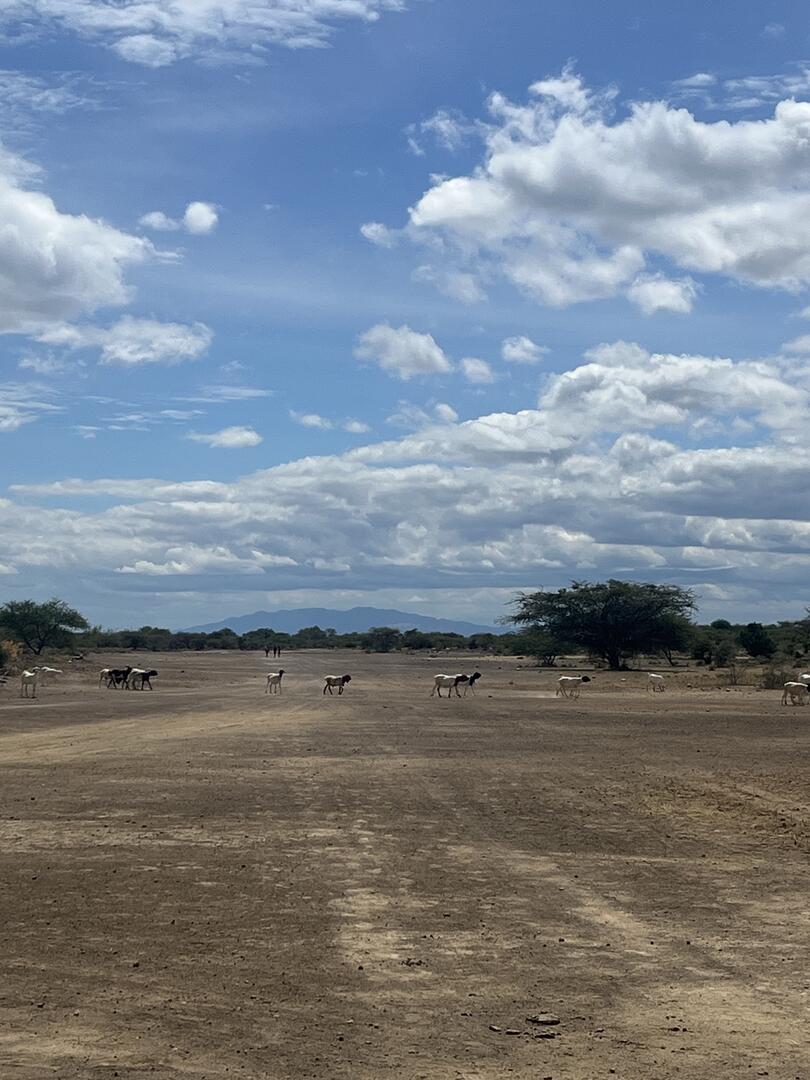
Wildlife wasn’t expected to be a major problem, although elephants occasionally wandered through the area and always seemed unimpressed by our schedules. Predators were uncommon, but giraffes, zebras, and countless goats were frequent visitors. In fact, before every landing, pilots would circle the runway to ensure it was clear of animals. Most often the culprit wasn’t a zebra or giraffe—it was a young Maasai’s goat herd enjoying an afternoon nap in the middle of the landing strip.
Building runways is always an adventure.
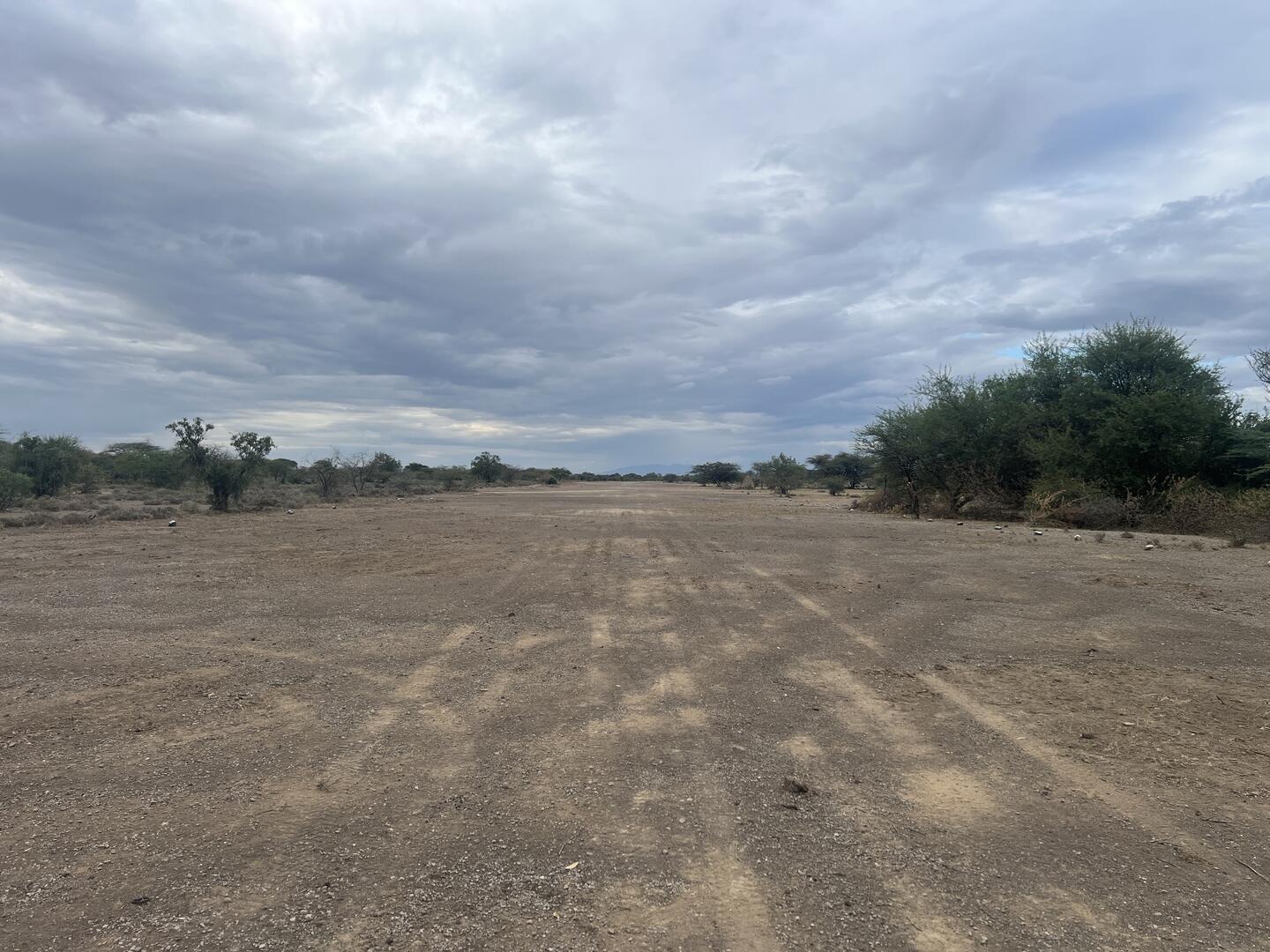
First, we clear hundreds of meters of brush, rocks, and uneven ground. There are no fancy earth-moving machines out here. Most of the work is done with hand tools, determination, and a workforce willing to spend long days under the African sun. Soft sandy areas are reinforced with rock and gravel. Large white-painted stones are carefully placed along the edges to mark the runway boundaries.
At both ends, the strip is widened to create turnaround areas and parking space. After weeks of labor, we walk every meter of the runway, measuring length, width, elevation, and heading before entering the information into flight navigation systems.
Then comes the exciting part.
Some brave pilot volunteers to be the first person to land.
There is something impressive—and slightly concerning—about watching an aircraft circle overhead while everyone on the ground silently hopes they measured everything correctly. Fortunately, the runway performed beautifully.
The difference it made was dramatic. Driving from Nairobi to camp could take eight hours on a good day and much longer during the rainy season. Flying took less than forty minutes. The journey itself was spectacular, descending from the cooler highlands around Nairobi into the vast golden brushlands of Maasailand.
With the runway complete, attention shifted to the camp itself.
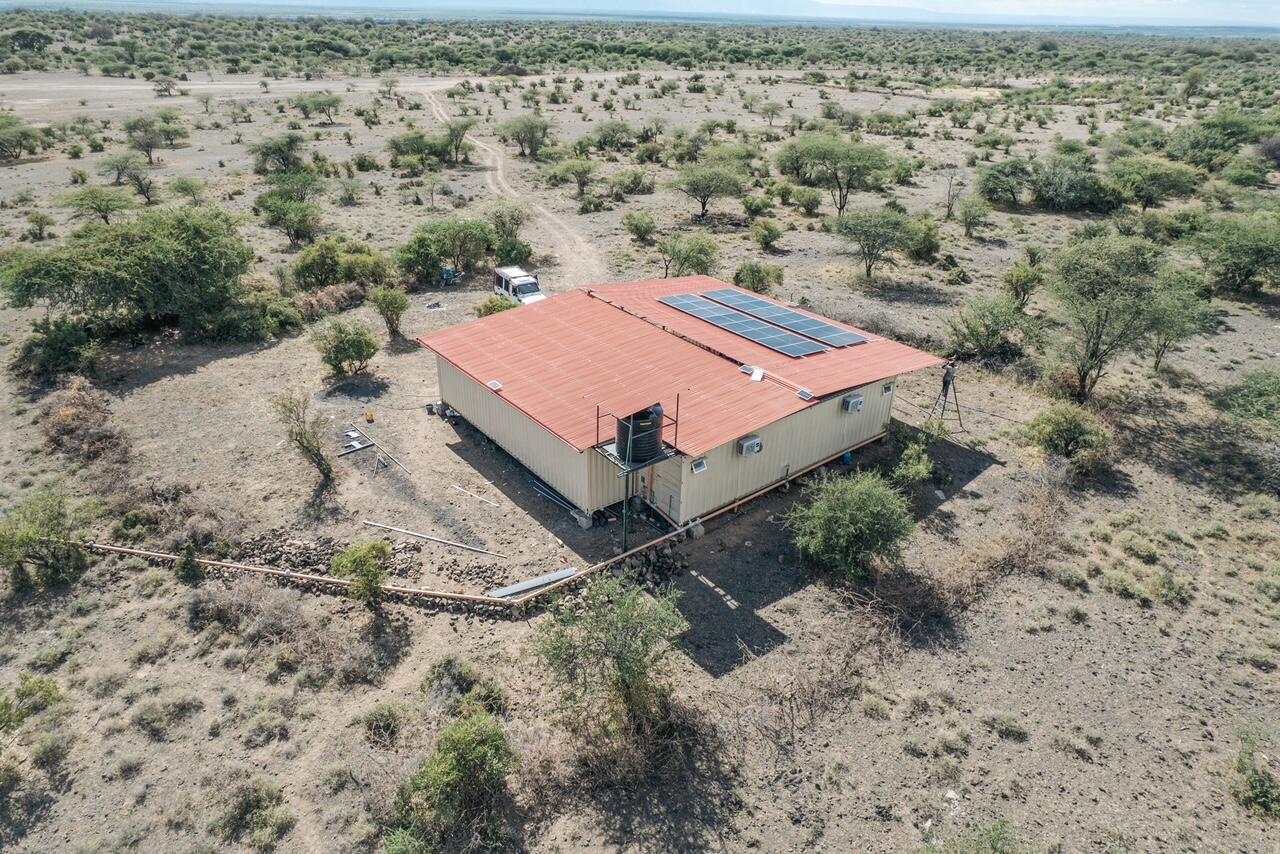
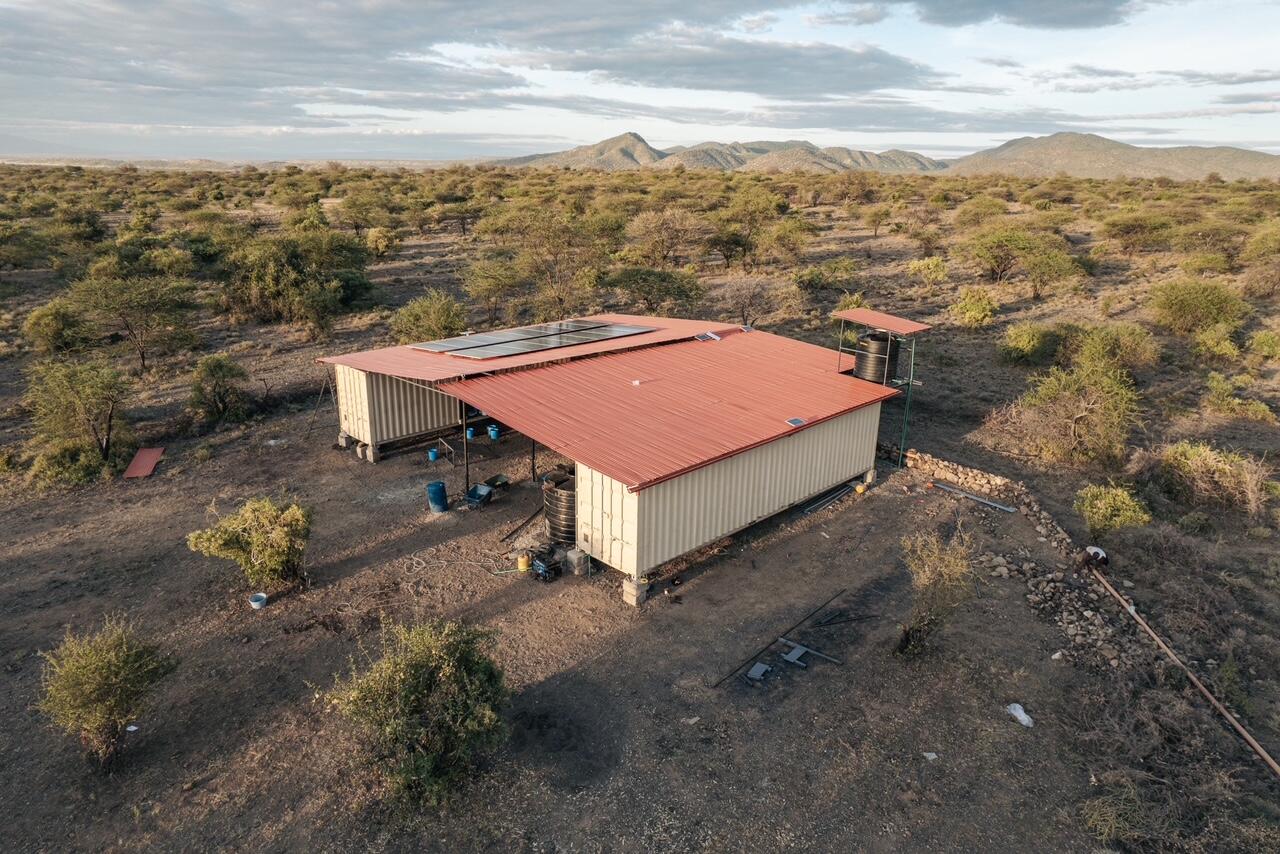
The design was straightforward but practical. Three shipping containers would be arranged in a U-shape. One container would serve as storage. The center container would house a kitchen, bedrooms, and bathrooms. The third would provide additional storage, office space, and climate-controlled medical storage.
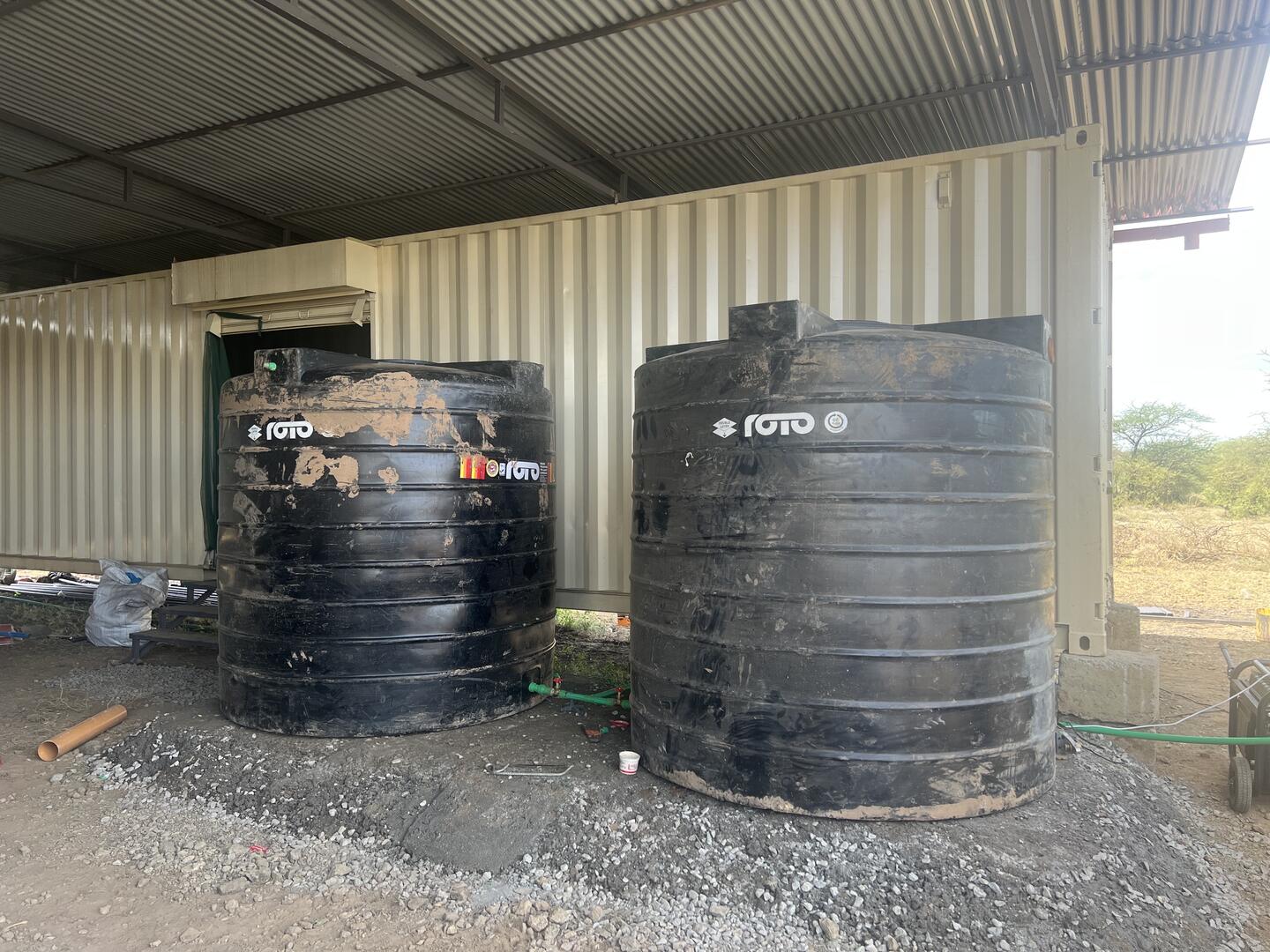
A large metal roof would span all three containers, creating a shaded courtyard in the center. Solar panels would provide power. Large water tanks and a rain catchment system would collect precious water. Security cameras would monitor the perimeter. A hand-dug septic system would complete the setup.
The beauty of the design was that everything could eventually be dismantled and removed, leaving almost no trace behind.
The timeline was ambitious: six months.
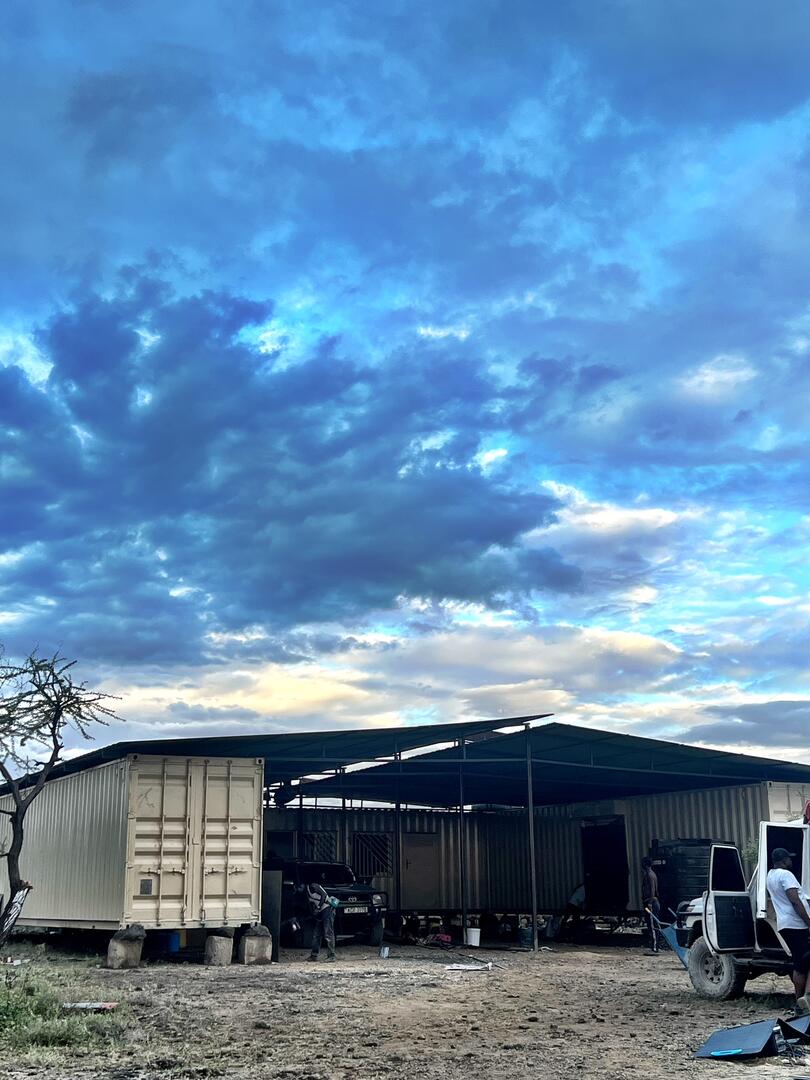
Truck after truck arrived carrying supplies, concrete, fuel, tools, generators, water, building materials, and occasionally parts that nobody realized were missing until someone desperately needed them. Construction crews worked around the clock at times, pushing hard to stay on schedule.
The final week was absolute chaos.
Workers rushed in every direction. Vehicles arrived loaded with last-minute supplies. Dust filled the air. Generators rattled constantly. Everyone was exhausted.
Yet slowly, the camp came to life.
One day we were sweating through another night inside a metal shipping container that felt remarkably similar to a pizza oven. The next day the solar system was operational, air conditioners were humming, and life suddenly seemed much more civilized.
The first flush of a working toilet was celebrated far more enthusiastically than most people would understand. After weeks of relying on what we affectionately called the “bush bathroom,” modern plumbing felt like a luxury resort.
Then came another milestone.
We powered up the Starlink system.
Despite my frequent lectures about limiting screen time, I have to admit there was genuine excitement when the camp connected to the outside world. Suddenly messages flowed in, weather forecasts appeared, and family members could be reassured that we were still alive despite our tendency to disappear into remote corners of Africa.
When the time finally came for me to leave, I drove away from camp northward to Nairobi and a long flight home and reflected on everything that had been accomplished.
What had started as an empty patch of brushland was now a functioning operational base. Over the next five years, aircraft would land on our little runway carrying guests, staff, and supplies. Motorcycles and Land Rovers would head out toward distant villages. New friendships would be formed. Water projects would bring clean, safe water to remote communities. There would be challenges, breakdowns, wildlife encounters, unexpected adventures, and stories yet to be written. I can’t wait !
Standing there in the middle of Maasailand, watching the dust swirl across the runway we had built with our own hands, I couldn’t help but feel grateful.
Not everyone gets the opportunity to work in places like this.
I have been fortunate enough to experience many remote corners of the world, but this little bush camp in Maasailand will always hold a special place among them.
.
Building a Bush Camp in Maasailand
Copyright © 2026 by D. Jason Miller
All rights reserved. No part of this publication may be reproduced, distributed, or transmitted in any form or by any means, including photocopying, recording, or other electronic or mechanical methods, without the prior written permission of the publisher, except in the case of brief quotations embodied in critical reviews and certain other noncommercial uses permitted by copyright law.

