Jason Miller- written while camping in beautiful Colorado
Let’s talk adventure luggage. Not luggage designed for a leisurely stroll through Paris with a cappuccino in one hand and a croissant in the other. I’m talking about luggage built for places where roads are optional, dust is unavoidable, and “baggage handling” resembles a competitive sport.
Friends and colleagues often ask what luggage I prefer. Given how much time I spend on the road—and how ruthlessly I abuse my gear—I suppose I’ve accidentally become a luggage test lab. There are plenty of opinions on this subject, and mine is worth exactly what you paid for it.
Many of my journeys take me to remote corners of the world: deep in the Amazon Basin, out in the African bush, and other places where waterproof, dustproof, and nearly indestructible aren’t marketing buzzwords—they’re survival traits.
The Checked Baggage Champion
Let’s start with checked baggage.
Checked luggage has a tough life. It gets dragged across dirt airstrips, tossed into truck beds, strapped onto roof racks, and then handed over to airport ground crews who appear to view luggage as an opponent rather than a possession.
For me, nothing beats a Pelican case.
For years I traveled with two Pelican 1650 cases—the largest size that can still be checked as baggage. At one point in my career, both cases came with me on nearly every trip. They were perfect for carrying equipment that absolutely could not be damaged.
Their waterproof credentials were tested in a rather unconventional way. During one expedition, space in a canoe was reserved for people rather than luggage, so my Pelicans spent several days floating behind us, tied to ropes like obedient plastic ducklings. While the cases drifted through rivers and rapids, everything inside remained perfectly dry.
Most importantly, all my underwear survived the journey clean, dry, and cozy.
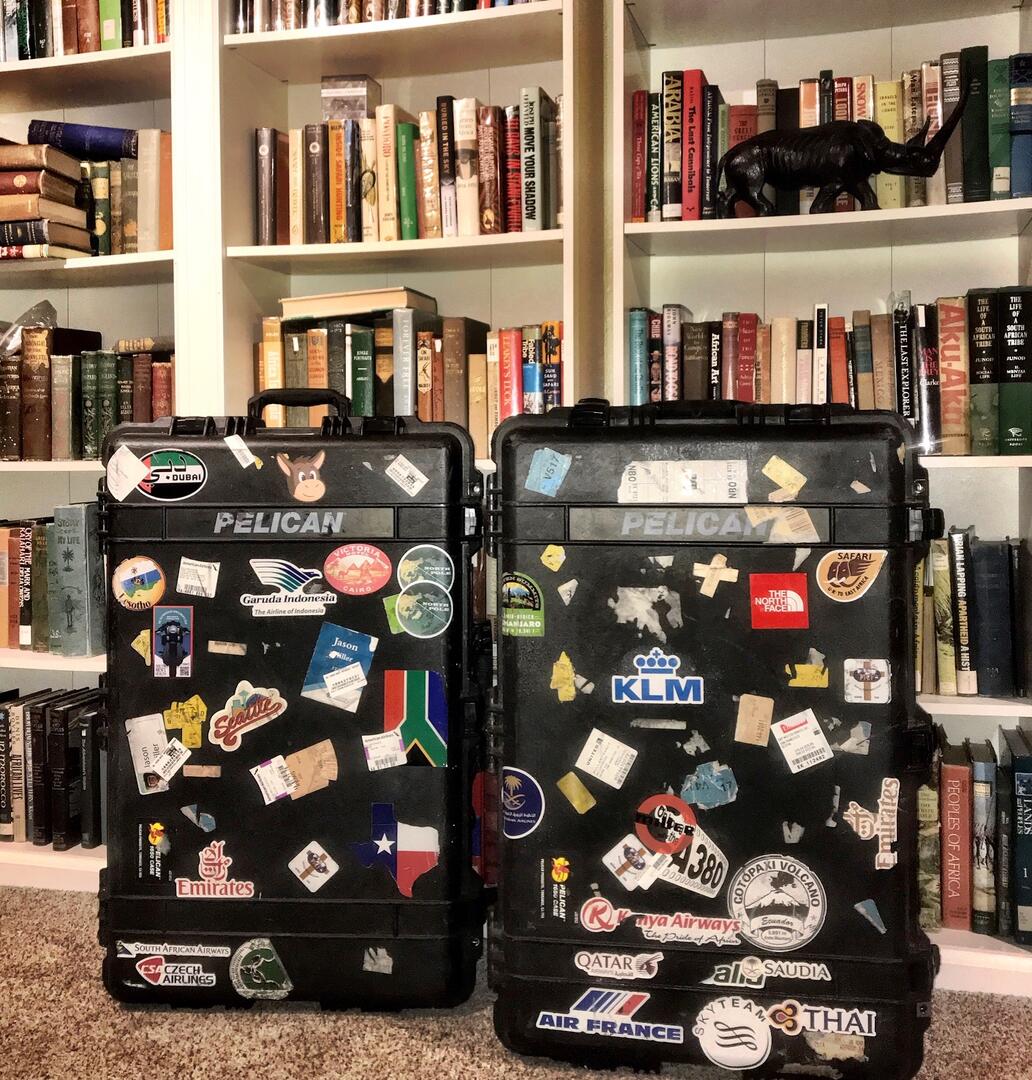
Dust protection? The Kalahari Desert provided an excellent laboratory. Both 1650s have spent thousands of miles strapped to the roof rack of a Land Rover, collecting layers of dust, dirt, and rain. Despite looking like archaeological artifacts on the outside, everything inside remained clean and pristine.
I’ve carried plenty of valuable cargo in those cases. I also once carried a rubber snake that my children secretly packed inside as a practical joke. Unfortunately, the customs agent in Nairobi did not share their sense of humor and accused me of intentionally trying to scare airport staff.
Parenting victories come in many forms.
Yes, the 1650s are heavy. Their weight reduces how much you can pack inside before reaching airline limits. But the reliability is worth every pound. As an added bonus, during long airport lines they double as an excellent chair. After a 20-hour travel day, a Pelican 1650 supporting 170 pounds of exhausted traveler is a beautiful thing.
My Brief Affair with Luxury Luggage
After hundreds of flights across oceans and continents, I gradually learned how to travel lighter. These days I can comfortably live out of carry-on luggage for two weeks or more, so unless I’m hauling equipment into Africa, the big Pelicans usually stay home.
A few years ago, after doing my research, I decided to try a premium carry-on from Victorinox.
It looked fantastic. Lightweight shell. Clever organization. Handy exterior laptop compartment. It was marketed as practically indestructible and came with a reassuring “lifetime warranty.”
Sold.
For about five years it performed admirably while rolling hundreds of miles through airports around the world. Then the wheels began wearing unevenly. Eventually they became more oval than round, transforming the suitcase into a wobbling, wandering shopping cart that seemed determined to travel in a different direction than I was.
One day while sitting in LAX, I finally contacted customer service about a warranty repair.
As it turns out, warranties generally do not cover parts that wear out from… being used.
Imagine my surprise.
Right or wrong, I maintain that a $600 suitcase should live forever. Since reality disagreed with me, I retired the bag to a hotel in Kenya where it now serves a quieter life storing miscellaneous belongings.
And so I returned to the brand that had never let me down.
Enter the Pelican Air 1535
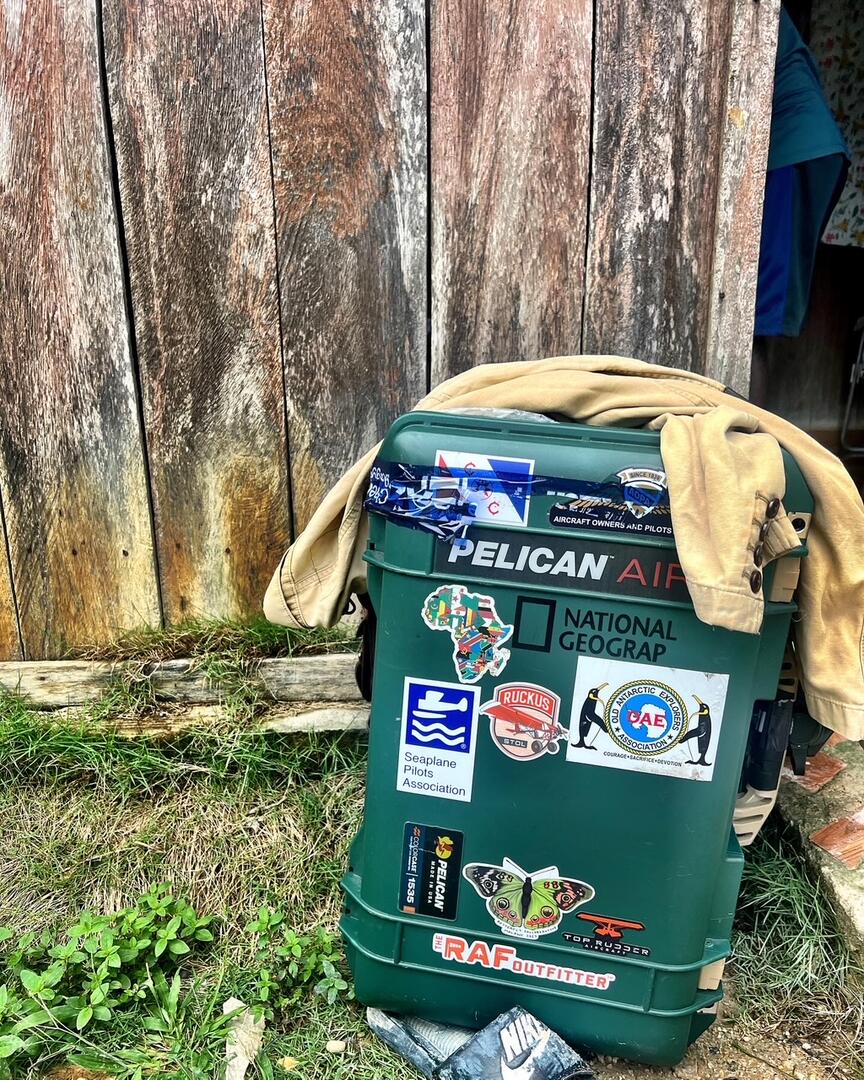
The Pelican Air 1535 is my current carry-on of choice.
It’s a compact hard-shell case with absolutely no interest in being fashionable. It doesn’t have built-in USB ports. It won’t charge your phone. It won’t make you coffee. It doesn’t even have four wheels.
What it does have is reliability.
It’s waterproof, dustproof, and built like it expects to be dropped from a small aircraft. It’s carry-on sized, surprisingly spacious, and tough enough to survive the kind of travel that would make most luggage manufacturers nervous.
I added an aftermarket mesh organizer to the inside lid for toiletries and smaller items. So far it has survived years of abuse without complaint.
Which is more than I can say for some travel companions.
The Quest for the Perfect Travel Bag
Alongside the 1535, I usually carry either a backpack, messenger bag, or duffel.
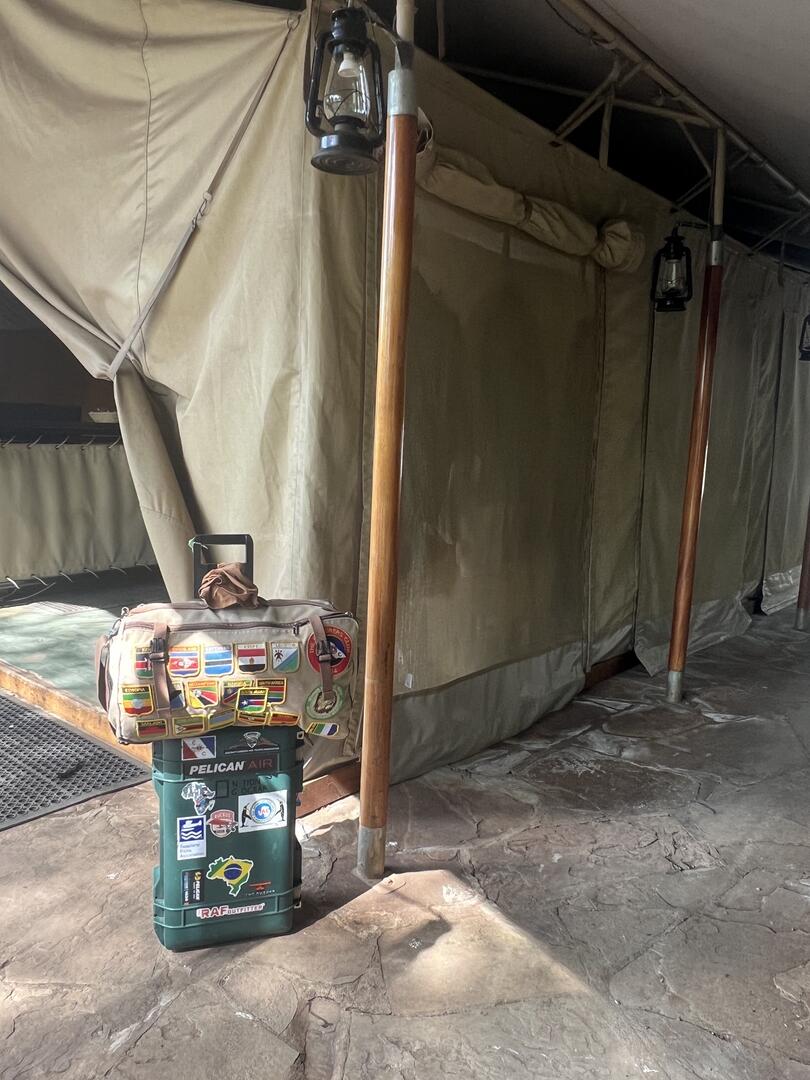
I’ve read countless gear reviews and purchased more bags than I’d care to admit. Over time I’ve concluded that many reviews focus on convenience features or are written by people who receive free gear. Imagine that.
For remote travel, my requirements are simple.
The bag must function as both a duffel and a backpack.
More importantly, the backpack straps must disappear completely—either by being removable or by zipping into a dedicated compartment.
This feature is surprisingly overlooked. Many small aircraft serving remote destinations don’t allow carry-on luggage, and crews generally aren’t enthusiastic about loose straps dangling from bags being loaded into cramped cargo holds.
You can either wrap your bag in enough airport plastic to preserve a mummy or simply zip the straps away.
I prefer the second option.
After experimenting with numerous bags, the Witzman Travel Backpack has become my favorite. The heavy canvas and leather construction feels substantial, the pockets are easy to access, and the bag converts seamlessly between duffel and backpack modes. The zip-away strap cover keeps everything tidy when checking the bag.
It isn’t waterproof or dustproof, but it has survived being strapped to the back of my adventure motorcycle across southern Africa, which is a fairly strong endorsement.
For Places That Are Permanently Wet
Finally, there are the specialty bags.
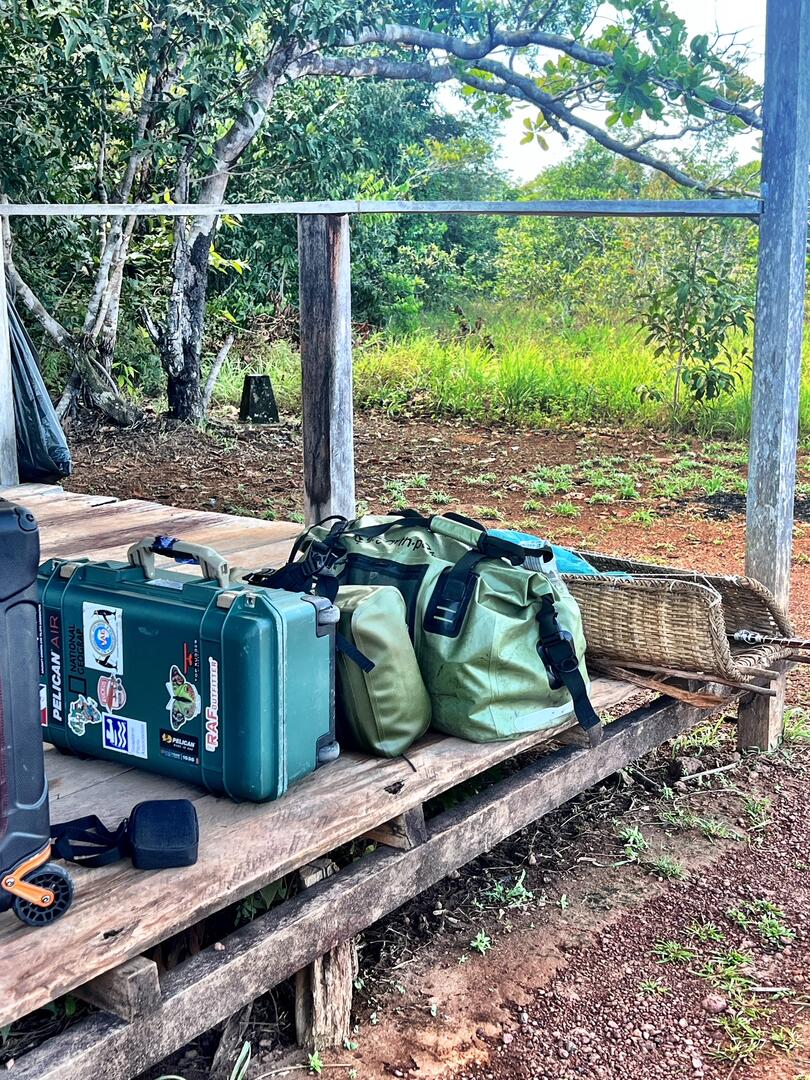
For work in environments that seem committed to being wet all the time—think the Amazon Basin or African rainforests—I purchased a set of Expedition Units Project 8020, 23-liter rubber bags.
These bags are fully waterproof, dustproof, flexible, and remarkably easy to strap onto motorcycles, boats, trucks, or whatever happens to be available that day.
Unlike hard cases, they conform to awkward spaces while still protecting gear from the elements.
They’ve accompanied me through rainforests, river systems, and countless miles of African motorcycle travel. So far they’ve kept my equipment dry, protected, and significantly happier than I usually am after those journeys.
Final Thoughts
If your adventures mostly involve hotel elevators and smooth airport floors, there are plenty of excellent luggage options available.
But if your travels occasionally involve rivers, dust storms, bush planes, overloaded Land Rovers, motorcycles, questionable roads, and customs agents unexpectedly discovering rubber snakes, I’ve found that simplicity and durability win every time.
Fancy features come and go.
Waterproof, dustproof, and nearly indestructible never go out of style.
Jason Miller
.
.
Adventures in Luggage: Notes from a Professional Bag Abuser
Copyright © 2026 by D. Jason Miller
All rights reserved. No part of this publication may be reproduced, distributed, or transmitted in any form or by any means, including photocopying, recording, or other electronic or mechanical methods, without the prior written permission of the publisher, except in the case of brief quotations embodied in critical reviews and certain other noncommercial uses permitted by copyright law.

