Jason Miller- Nairobi Kenya
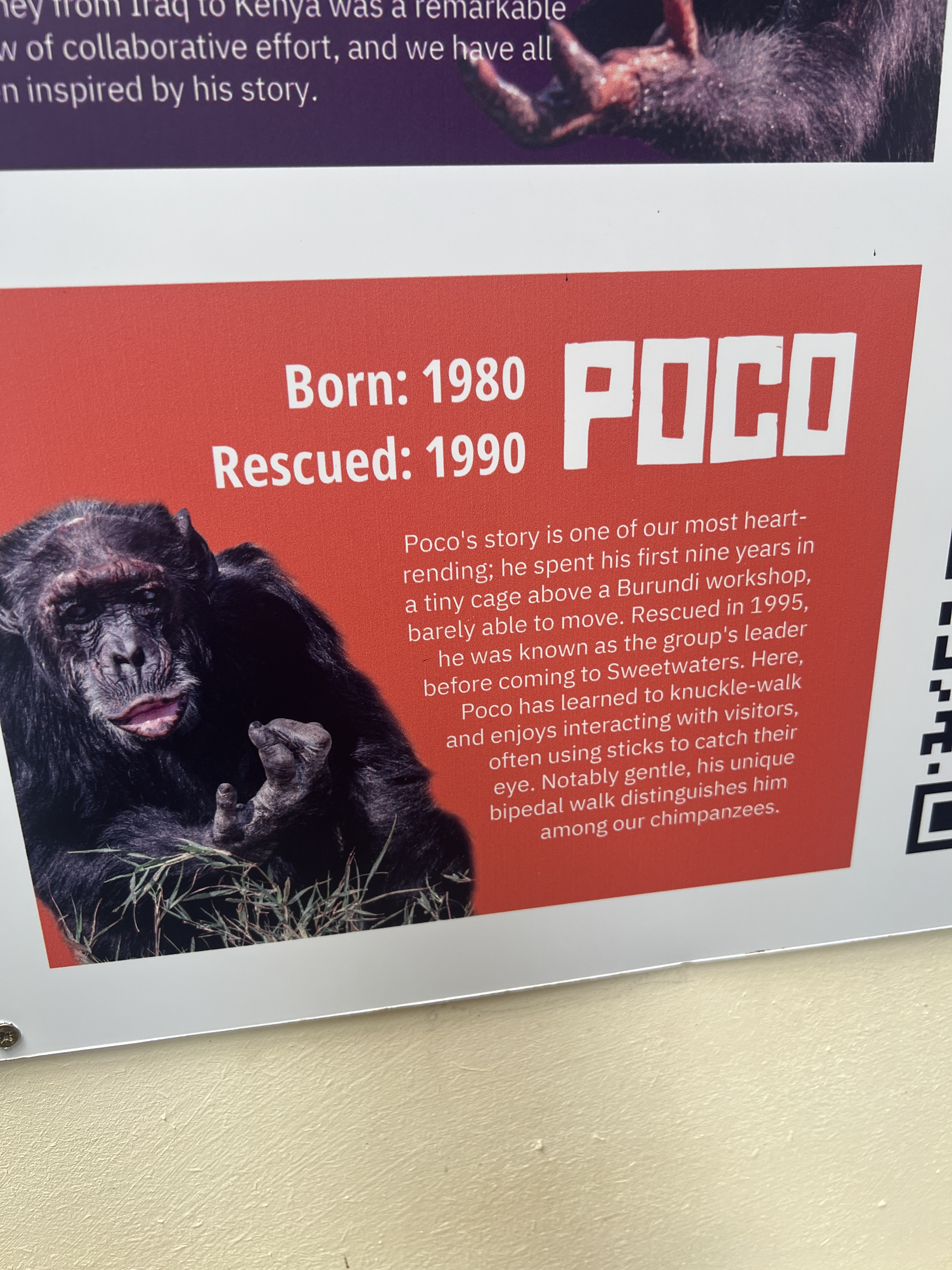
Poco’s life began with violence.
Deep within the forests of Burundi, he clung tightly to his mother as hunters moved silently through the trees in search of bush meat. Then came the crack of a gunshot, shattering the jungle’s calm. His mother collapsed into the leaves, lifeless, while Poco screamed beside her — too young to understand death, but old enough to feel terror. The hunters took her body for meat, and they took Poco because a baby chimpanzee could be sold alive.
In an instant, he was torn away from the only world he had ever known.
Instead of growing up surrounded by the safety and affection of a chimpanzee family — learning to climb, forage, and play beneath the forest canopy — Poco was imprisoned inside a cramped market stall in Burundi. The cage was so small and narrow that he could barely move. Unable to walk naturally on all fours as chimpanzees are meant to, he was forced to stand upright day after day simply to fit within the rusted bars.
Customers laughed and pointed as they passed. The shop owner displayed him as a living attraction to draw attention to the store. Poco became entertainment — a frightened, lonely child trapped in confinement.
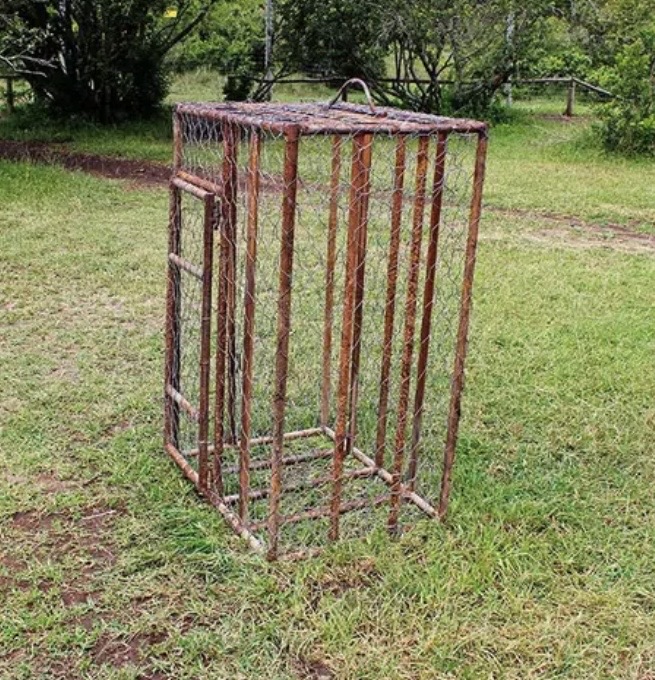
Chimpanzees are deeply social and emotional animals. In the wild, a young chimp spends years beside its mother, comforted by touch, protected by family, and surrounded by companionship. Poco had none of that. No trees. No freedom. No comfort. Only concrete, heat, noise, and isolation.
As the months turned to years“, the unnatural confinement began to reshape his body. Constantly standing upright strained his legs and spine, while inactivity weakened his muscles. The cage robbed him not only of freedom, but of the ability to behave like a chimpanzee at all.
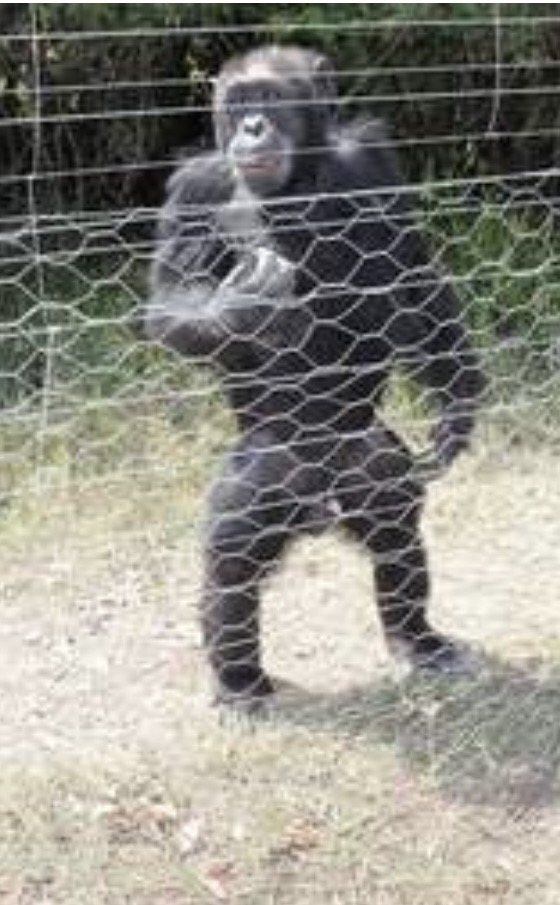
Often, Poco stood silently behind the bars, staring outward with hollow eyes and rocking gently back and forth — a heartbreaking behavior commonly seen in traumatized captive primates. The playful curiosity natural to young chimpanzees slowly faded, replaced by fear, confusion, and despair.
Over time, whispers about the little chimpanzee in the market began to spread. Travelers, local residents, and eventually animal welfare advocates witnessed the heartbreaking conditions in which Poco was being kept. People spoke of the young chimp forced to live in a cage so small he could not even move naturally.
The story disturbed everyone who heard it.
By the early 1990s, growing concern finally reached government authorities. Reports describing the captive chimpanzee being used as a roadside attraction — isolated, confined, and clearly suffering — prompted officials to act. What had once been dismissed as an ordinary part of the bush meat and wildlife trade was finally being recognized for what it truly was: cruelty.
When authorities intervened, Poco was rescued from the market stall that had served as his prison for years. For the first time since being torn from his mother, the bars surrounding him were opened not to display him, but to save him.
Poco was taken to the Jane Goodall Institute in Burundi, where his long journey of healing finally began. For two years, he was cared for by people who showed him patience, safety, and compassion — things he had been denied for most of his young life. Slowly, he was introduced to a more natural environment, learning again what it meant to climb, explore, and live beyond the confines of a cage. For the first time in years, Poco experienced comfort, companionship, and the beginnings of freedom.
But peace in the region would not last. As civil war spread across Burundi, concerns grew for the safety of both the animals and the people caring for them. To protect Poco from the violence once again surrounding his world, Poco was transferred to Ol Pejeta Conservancy in Kenya.
There, far from the market cage where his suffering began, Poco finally found peace. Surrounded by open space, care, and the company of other chimpanzees, he was given the chance to live quietly and safely. After a life that began with fear, loss, and captivity, Poco now spends his days in the calm of sanctuary — a survivor who, at last, was allowed to simply be a chimpanzee again.
Today, visitors to Ol Pejeta Conservancy can still meet Poco. And among the chimpanzees, he stands out — quite literally. Known throughout the sanctuary as the chimpanzee who walks like a person, Poco’s upright posture remains a lasting consequence of the years he spent trapped inside a cage too small for him to move naturally. What began as a cruel adaptation for survival became a permanent part of who he is.
Yet despite everything he endured, Poco survived.
I decided to write this short story not only to share Poco’s heartbreaking and remarkable journey, but also to shine a light on the incredible work being done at Ol Pejeta Conservancy. Behind every rescued animal is an enormous effort involving sanctuary staff, veterinarians, conservationists, and caregivers who dedicate their lives to protecting animals that have suffered from poaching, trafficking, and habitat destruction.
Sanctuaries like Ol Pejeta rely heavily on public awareness, support, and resources to continue their rescue and rehabilitation efforts.
For visitors, meeting Poco is unforgettable. Beneath his unusual walk is a survivor — a living reminder of both humanity’s cruelty and its capacity for kindness.
.
.
The Story of Poco
Copyright © 2025 by D. Jason Miller
All rights reserved. No part of this publication may be reproduced, distributed, or transmitted in any form or by any means, including photocopying, recording, or other electronic or mechanical methods, without the prior written permission of the publisher, except in the case of brief quotations embodied in critical reviews and certain other noncommercial uses permitted by copyright law.

