Jason Miller
There is a feeling one gets when working in remote and often impoverished regions of the world. It’s difficult to explain — an odd kind of out-of-body feeling. People often quote travelers by saying we leave pieces of ourselves behind in every place we visit, and I think that is part of it. But it goes deeper than that.
Imagine beginning a journey with thirty-seven hours of travel time, leaving beautiful Colorado and passing through airports where gourmet meals, clean floors, and climate control are so normal they barely register. Four flights later, each aircraft becoming smaller and more worn down than the last, you eventually find yourself squeezed into a battered little Cessna headed toward a dirt landing strip that, only a week earlier, had been closed due to civil unrest.
My entire life for the next twenty-five days fits into one small Pelican case. A few clothes, some gear, medicine, and whatever snacks I can force into the corners because experience has taught me that small comforts matter more than you think.
The plane lands hard, bouncing through dirt and rocks. The propeller never even stops spinning. Bags are tossed out quickly and within minutes the pilot turns around and disappears back into the sky, leaving behind a strange emptiness that settles deep in your chest. The silence afterward feels enormous.
A dusty old Land Cruiser eventually arrives, an NGO flag whipping from a tall pole mounted to the front bumper. The flag serves two purposes. First, it signals to authorities that we are there to “help.” Second, it advertises exactly who we are to anyone looking for political leverage, ransom, or trouble.
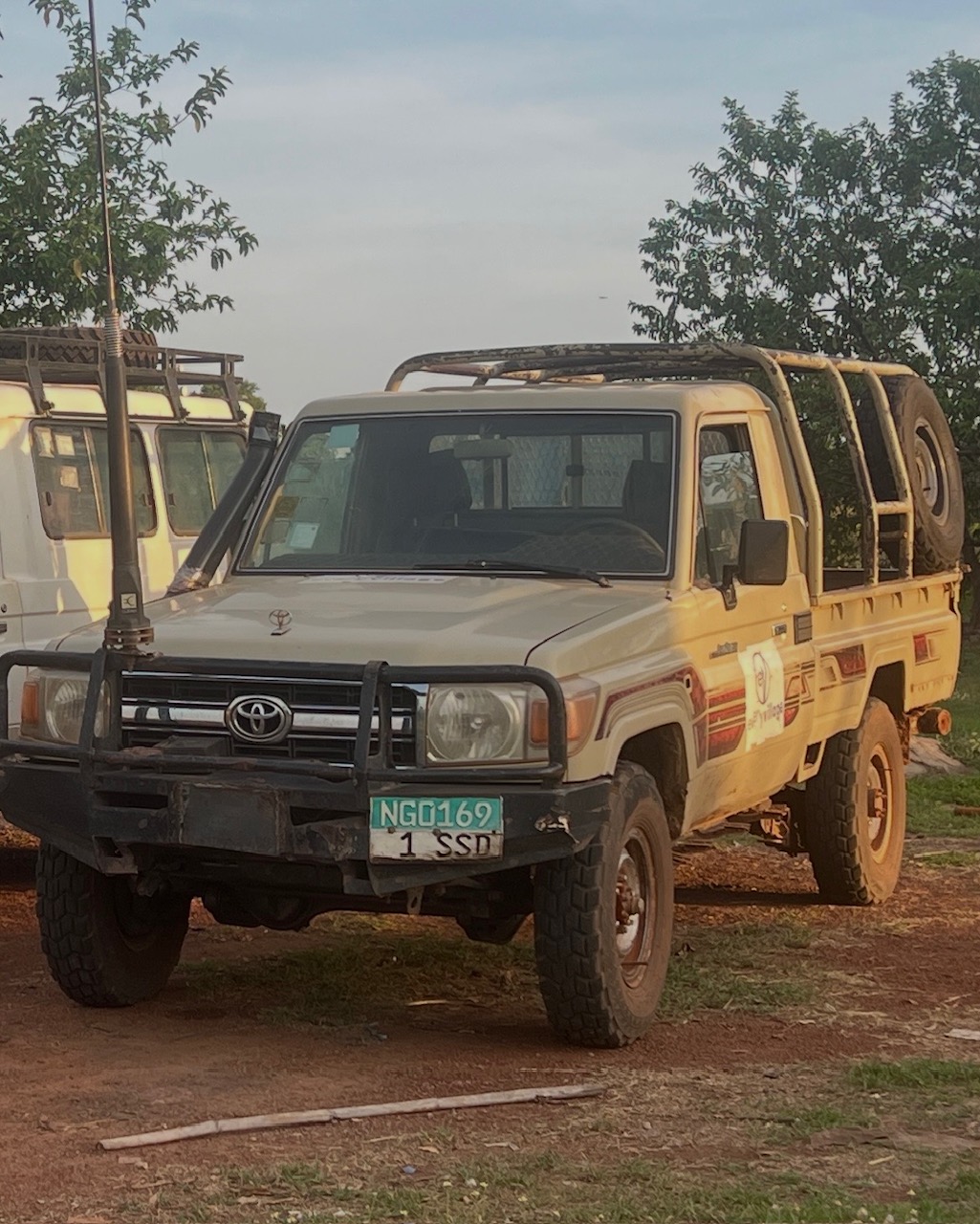
I’m quickly loaded into the truck and driven through the village toward the compound where our project is based. My room is a tiny concrete box with no ventilation and temperatures well over one hundred degrees. For the first few nights I try to sleep inside, but eventually, like always, I surrender and move outdoors into a hammock. Somehow it is easier to tolerate mosquitoes, insects, and the occasional animal wandering nearby than to lie in a room stewing in your own sweat.
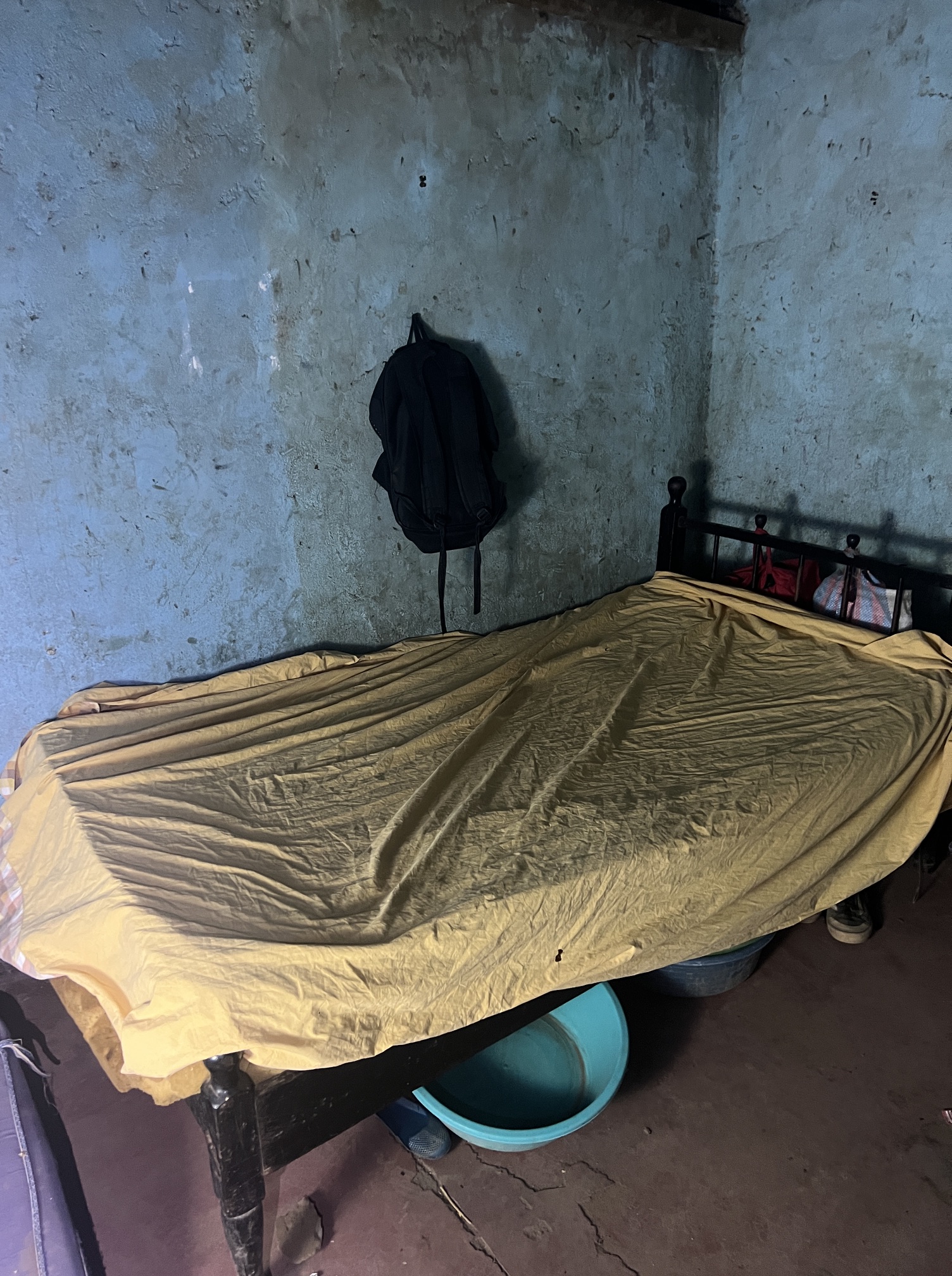
After several days, a routine forms.
The life I left behind in the United States begins fading into the background, replaced by the rhythms of the local community. As a guest, no expense is spared. Beans and rice are served as every meal — a genuine luxury here, equivalent to eating filet mignon every night back home. The staff rarely leaves my side because my presence means they also get to eat well while I am there.
Sometimes I am lucky enough to get a Coca-Cola. Even served warm, it tastes like heaven.
Water comes from rivers or boreholes and is filtered as best it can be. I never drink enough. Dehydration creeps in slowly until eventually my body forces me to pay attention.
Every day brings uncertainty. As the sun sets, I often sit in disbelief thinking about the hardships people face daily: food scarcity, disease, slavery, children orphaned because a parent died from something completely preventable, women carrying workloads that would break many men I know back home. Over time the life I live in America begins to feel less real than the one unfolding around me.
The mental gymnastics become exhausting.
At night I lie awake in my hammock under suffocating heat, listening to the sounds of the village drifting through the darkness. Fights under the influence of homemade alcohol. Arguments. Crying. Somewhere off in the bush, someone screaming in pain or grief. Occasionally distant gunshots echo through the night and I catch myself listening carefully, curious and alert. Beyond all of it, thunderstorms build on the horizon, lightning illuminating the sky while I count the seconds between flashes of lightning.
What I don’t notice at first is how constantly being on edge changes me physically. My shoulders tighten. My back aches. Every interaction becomes a quiet exercise in reading body language and avoiding tension. I smile constantly, joke constantly, trying to lighten the mood wherever I go, even though it almost feels insulting considering the realities people are enduring around me.
Sometimes, late at night, I think of home and an overwhelming loneliness settles over me. If I allow myself to dwell too long on how impossible it would be to escape overland, how many flights and checkpoints and connections separate me from safety, the isolation becomes almost crushing.
The only thing that consistently quiets my mind is music.
I put on headphones and suddenly a song from the late 1970s or early 1980s transports me somewhere else entirely. Maybe it’s Olivia Newton-John. Maybe it’s the Eagles. Instantly I’m back in California as a kid, swimming all summer in the valley heat, never once worrying about food or safety. A different song takes me to the mid-1980s — growing my hair, worrying about concerts, girlfriends, cars, and all the insignificant things that once felt monumental.
Then the headphones come off.
And the transition back into reality is jarring beyond words.
The people surrounding me have never heard those songs. They have never spent a summer beside a swimming pool. Never ordered from a catalog. Never walked through a grocery store overflowing with food. Never experienced a life free from concern over illness, hunger, or survival.
And then come the questions that never leave me.
Why was I born where I was born?
Why was the newborn child I held today born here instead? A baby Girl
A child who may, by thirteen, be traded for cattle. A child whose future will likely consist of exhausting labor, childbirth, grief, and burdens nobody in my generation can fully comprehend.
Why do I get to leave?
Why do I get to board an airplane — something many people there cannot even imagine — and fly across the world back to my home in the pine forests of the Colorado Rockies?
Eventually the day comes when I hear the distant sound of the little Cessna circling overhead to signal its arrival. To my own surprise, I nearly cry with relief and guilt at the same time. Relief that the relentless heat, sickness, exhaustion, and tension are ending. Guilt because the smiling faces waving goodbye as I board will remain behind to continue living the reality I get to escape.
Within twenty-four hours I will be in Addis Ababa. Then Rome. Chicago. Finally Denver.
I will climb into a clean vehicle without an NGO flag attached to the bumper. I’ll buy a meal that costs more than several months’ wages where I just came from. I’ll shower in clean hot water. Sleep safely. Use a bathroom that works.
And suddenly I am surrounded once again by people who have never truly worried about survival. Even many of our poorest citizens still have access to programs, shelters, assistance, opportunities. I watch people complain about inconveniences while standing in line for ten-dollar coffees. In Colorado there are restaurants that serve gourmet meals to dogs while remembering villages where children survive on almost nothing.
The contrast is psychologically violent.
It takes weeks for my mind to recalibrate after each trip, and honestly, I still have not figured out how to reconcile any of it. I don’t know if there is a conclusion to reach.
I only know that eventually, after a few weeks home, I begin preparing again.
Another flight.
Another remote village.
Another set of faces, friendships, hardships, and memories.
And somewhere along the way, another piece of myself quietly left behind.
.
.
Reflections on Remote Travels: Leaving Pieces Behind
Copyright © 2026 by D. Jason Miller
All rights reserved. No part of this publication may be reproduced, distributed, or transmitted in any form or by any means, including photocopying, recording, or other electronic or mechanical methods, without the prior written permission of the publisher, except in the case of brief quotations embodied in critical reviews and certain other noncommercial uses permitted by copyright law.

