Jason Miller
Come with me to Kenya—the place that gave us the word safari, from the Kiswahili word sifiri, meaning “journey.”
I’ve been fortunate to visit parks both national and private, from South Africa to Ethiopia, but Kenya lingers in a different way. It’s not only the wildlife or the scenery, but the feeling of the place itself. Much of the country sits at higher altitude, which brings a particular balance to daily life: warm days, cool mornings and evenings, and almost no humidity. It makes camp life especially comfortable—fires at night, fresh air through the canvas walls, and the sense that time has loosened its grip just a little.
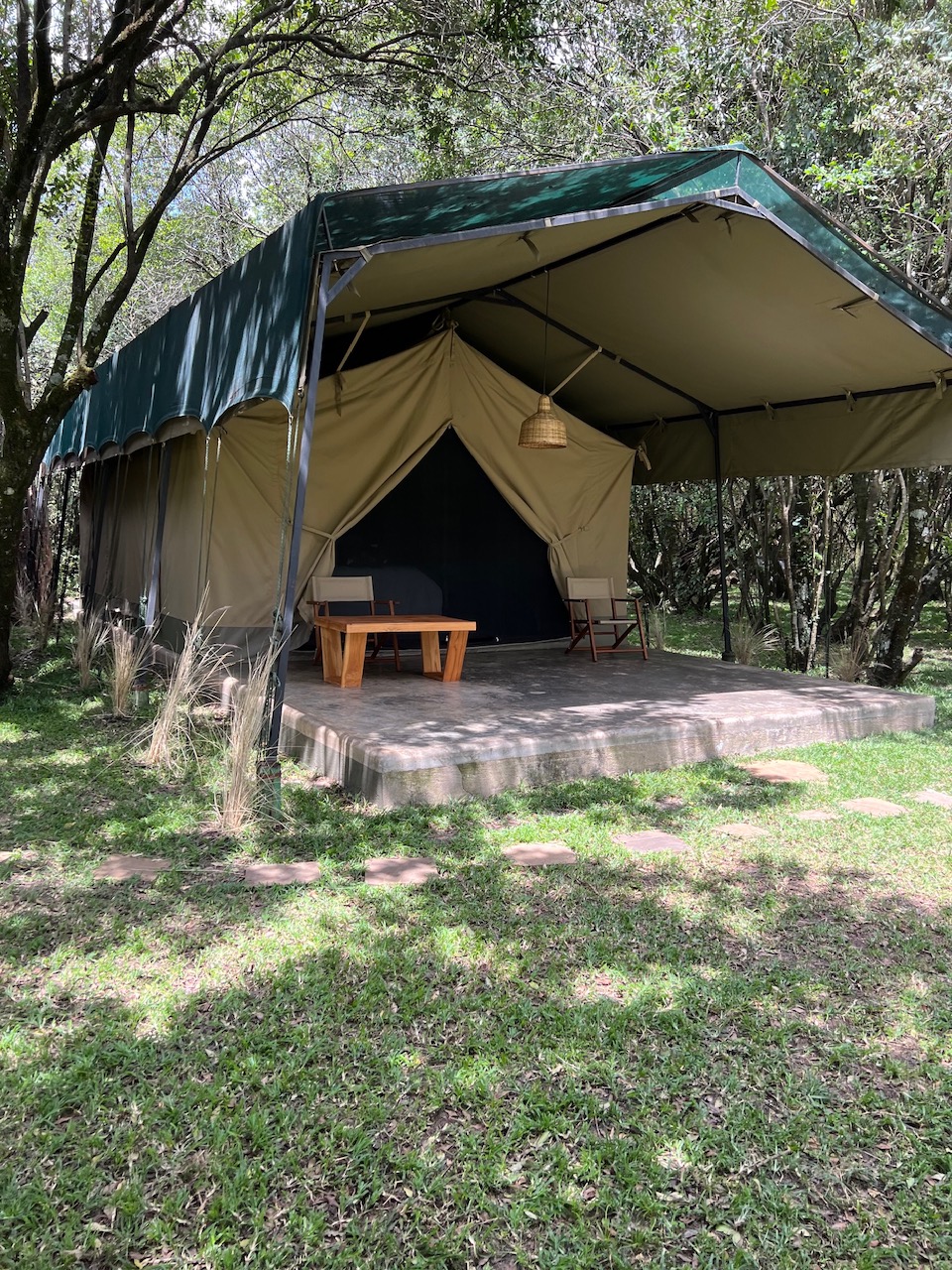
Morning begins before dawn. At 5:00 a.m., I’m awake—because a sunrise in Africa is not something to miss. I brew strong Kenyan tea—mostly milk, far too much sugar—and step outside onto the wooden deck of the tent. The camp is already stirring in its own quiet rhythm. In the distance, dishes clink, water is carried, and there’s soft laughter and conversation in Kiswahili as breakfast comes together out of sight but never out of earshot.
Then the horizon begins to change. Behind Mount Kenya, the sky slowly softens from deep black to indigo, then to a faint wash of pink. The silence of the night gives way almost instantly. Birds erupt into song, layered and unfamiliar to most ears. Kenya has over a thousand bird species, and in these first moments of light they all seem to announce themselves at once. Doves call steadily. A cuckoo echoes from somewhere unseen. Smaller birds flicker through the trees with sharp, irregular notes. Even the air feels awake.
Somewhere in the brush, baboons move before the heat of the day forces them into shade. At the waterhole, the morning gathering has already begun—impalas, zebras, perhaps elephants further back, all moving according to an ancient rhythm that predates anything human around them.
Every morning feels like a beginning. Not every creature will make it to nightfall. That truth sits quietly beneath everything. Yet there is also beauty in it—a sense that nothing here is wasted, and everything belongs to something larger than itself.
Sometimes we leave camp before first light. Blankets wrapped tightly around us, we climb into an open-sided Land Cruiser. The engine rattles in the cold as we set off into darkness. The wind cuts through the vehicle as the veldt slowly wakes. This is the most uncertain time of day—predators still moving, prey still alert, everything in motion but not yet revealed.
It’s called the hunting hour for a reason. Nothing is staged, nothing guaranteed. If you are lucky—or perhaps unlucky—you may witness a chase or kill, a moment that unfolds quickly and then is gone forever.
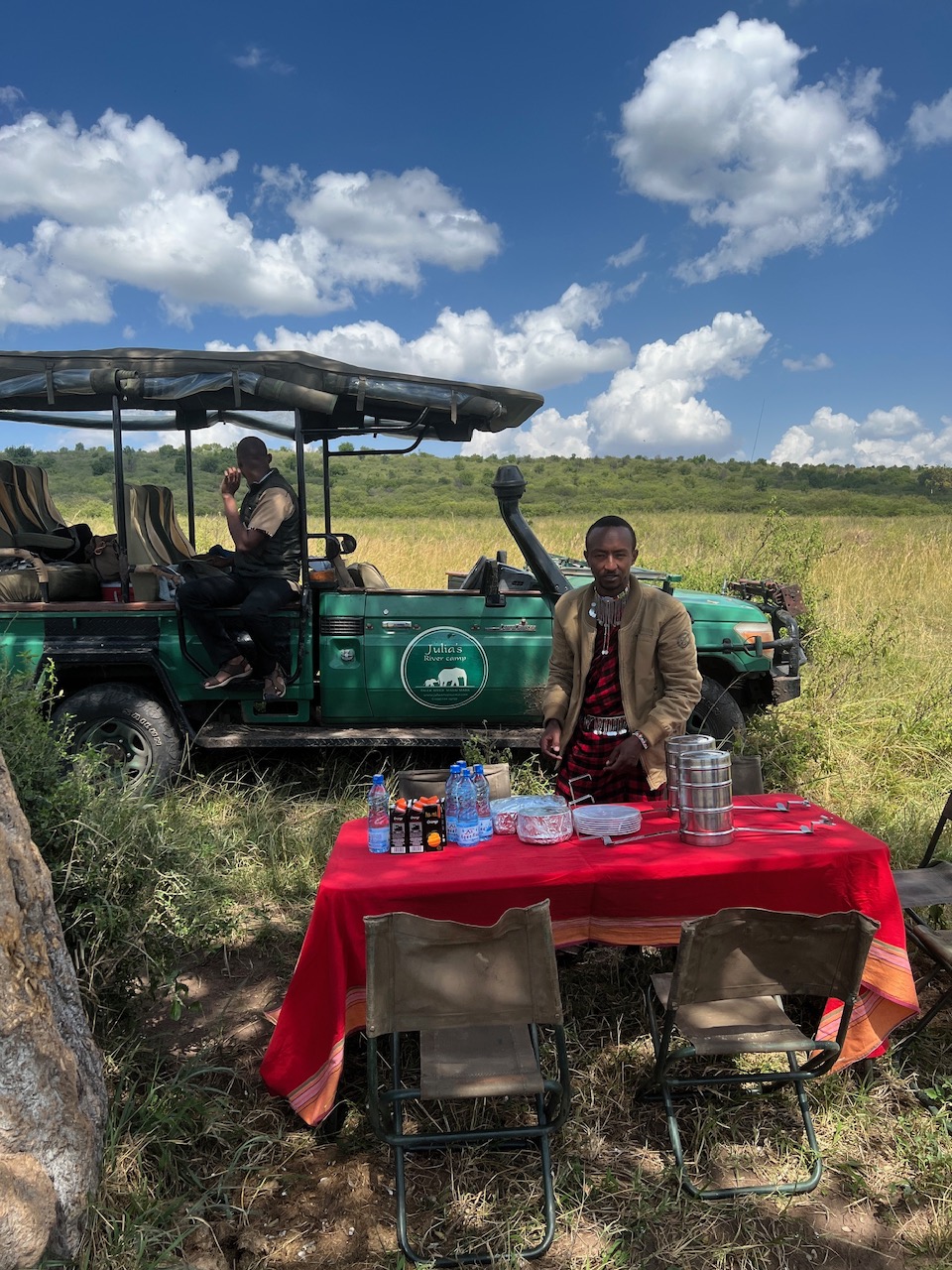
As the sun begins to rise, we often stop for breakfast in the field. A simple table is set beneath an acacia or an ancient fig tree. Coffee is poured, and the landscape opens in every direction. Zebras graze nearby, unbothered. Elephants move slowly across the horizon, pulling branches with quiet strength. The light changes quickly, warming the earth and shifting everything from muted grey to gold.
By midmorning, the chill has disappeared. Heat gathers across the plains. We return to camp, where the pace slows again. Some read, some rest, some sit quietly by the river watching the current move past. Lunch arrives later, unexpectedly refined for such a remote setting. There is a quiet skill to it all—meals prepared entirely in the bush, often with limited equipment and remarkable consistency. I once watched a birthday cake being baked over a fire using two pans and nothing more than patience.
In the afternoon, there is often a guided walk. It is slower than a drive, more deliberate. The guide leads with careful attention, watching tracks, wind direction, and movement in the grass. A rifle is carried, not as aggression, but as precaution. Everything is done with respect for distance and space.
On these walks, the landscape feels closer. You notice smaller things: crushed grass where something passed hours earlier, insect trails, bird calls shifting as you move through different terrain. Eventually we might reach a rise above a river where hippos sit half-submerged and crocodiles remain still along the banks. From there, chairs appear as if they’ve always been waiting. Coffee is served again. Time stretches out and slows completely.
Afternoon heat presses down, then gradually softens as the day turns. Back at camp, the atmosphere shifts. Drinks are served around the fire. Dinner follows, more formal than the rest of the day—shirts pressed, jackets sometimes worn, a quiet nod to Kenya’s colonial past still lingering in small rituals.
Beyond the lantern light, the bush continues its own conversation. Hippos grunt from the river. Elephants move through the trees like shifting shadows.
Tonight we dine under a blanket of stars. To the south, a storm is building. Lightning outlines billowing clouds rising high into the sky, far beyond the horizon. Thunder follows, delayed and distant, rolling across the landscape and giving the evening a subtle edge of unease.
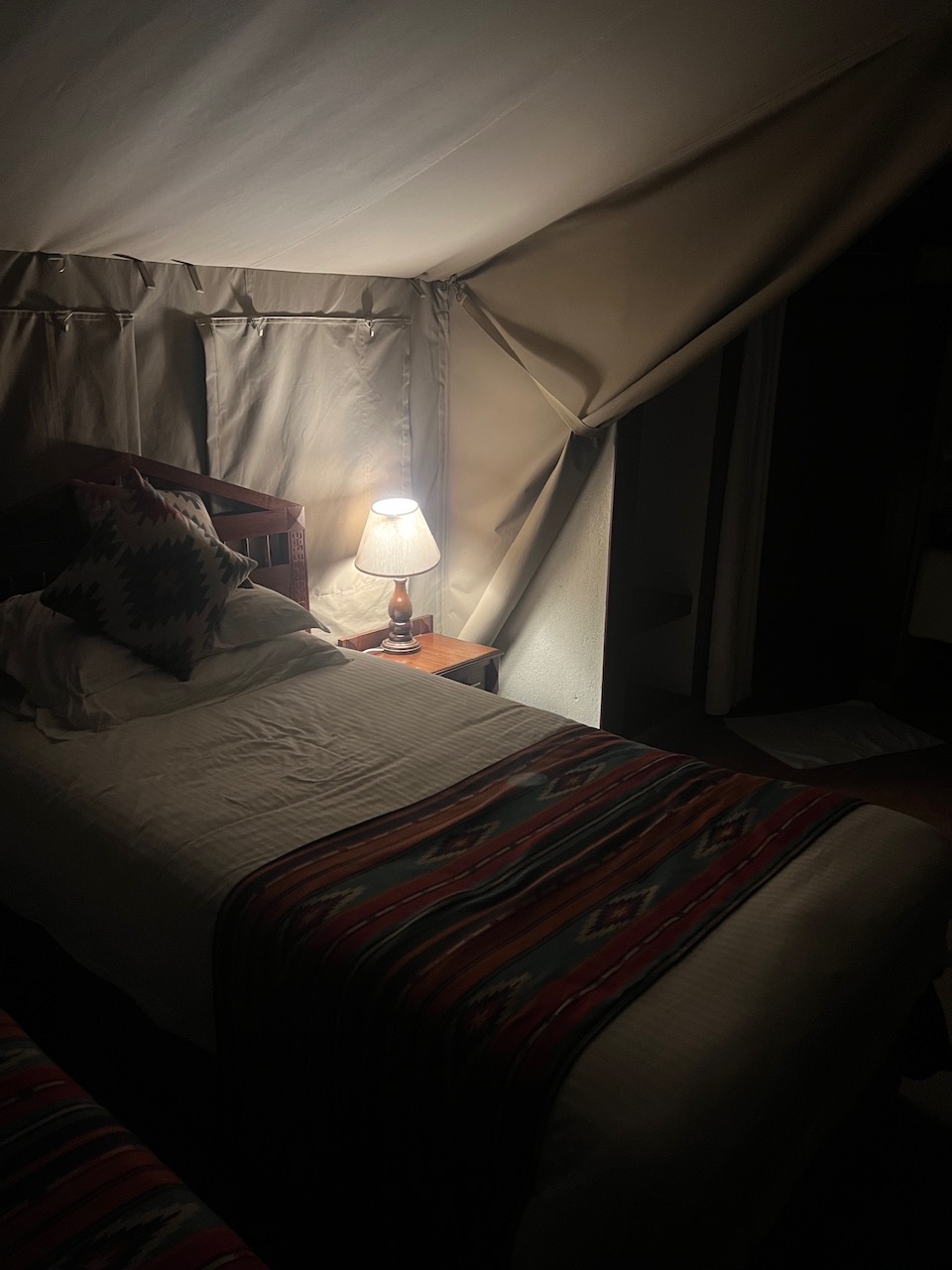
While we eat, the staff prepare the tents for the night. Mosquito nets are drawn, flaps are secured, and a hot water bottle is slipped between the sheets so the bed is warm when we return. Small details, but deeply appreciated after a long day outside.
After dinner, we do not walk alone. Not here. Not at night. Each tent is assigned a guide or guard, available with a simple call if needed. It is not about fear—it is about understanding where you are.
Inside the tent, the night is never truly quiet. Lions call from somewhere unseen. Leopards pass through camp without announcement. And occasionally, more often than expected, hippos move through the darkness, their presence heavy and unignorable, turning stillness into sudden commotion.
This is Kenya. Not just a place, but something you experience in layers—light, sound, stillness, and movement. A journey in the truest sense.
Experience the Magic of Kenyan Safaris
Copyright © 2026 by D. Jason Miller
All rights reserved. No part of this publication may be reproduced, distributed, or transmitted in any form or by any means, including photocopying, recording, or other electronic or mechanical methods, without the prior written permission of the publisher, except in the case of brief quotations embodied in critical reviews and certain other noncommercial uses permitted by copyright law.

