Jason Miller
Can words truly capture the love a man has for his trusty knife? Probably not—but that has never stopped men from trying, usually while holding the knife and staring thoughtfully into the middle distance.
I’m talking about that knife. The one your grandfather carried, the one your dad or uncle swore was “the only tool you’ll ever need” right before immediately reaching for three other tools. The kind of knife that somehow becomes less of an object and more of a personality trait.
A close friend of mine once had his pocketknife stolen from a hotel room in Kenya. Not just any knife—this one belonged to his late father, who he lost as a child. He didn’t care about the cash, the electronics, or anything else that disappeared. He basically put out an emotional APB: “Keep the money, keep the valuables, just bring back the knife.” Sadly, the thief did not share his sentimental priorities. As we like to say, that knife has now been generously “donated to the global redistribution program.”
My own favorite knife has a slightly more complicated origin story—because apparently, I can’t just buy things like a normal person.
While working with the Maasai people in southern Kenya, near the border of Tanzania, I was helping build a bush runway outside the village of Shamopole. As one does. I watched in awe as the men used their machetes—called pangas—for absolutely everything. Skinning animals, cutting firewood, clearing brush, probably filing taxes if needed. These blades were never out of reach: equally ready to fend off a predator or slice open a melon on a scorching East African afternoon.
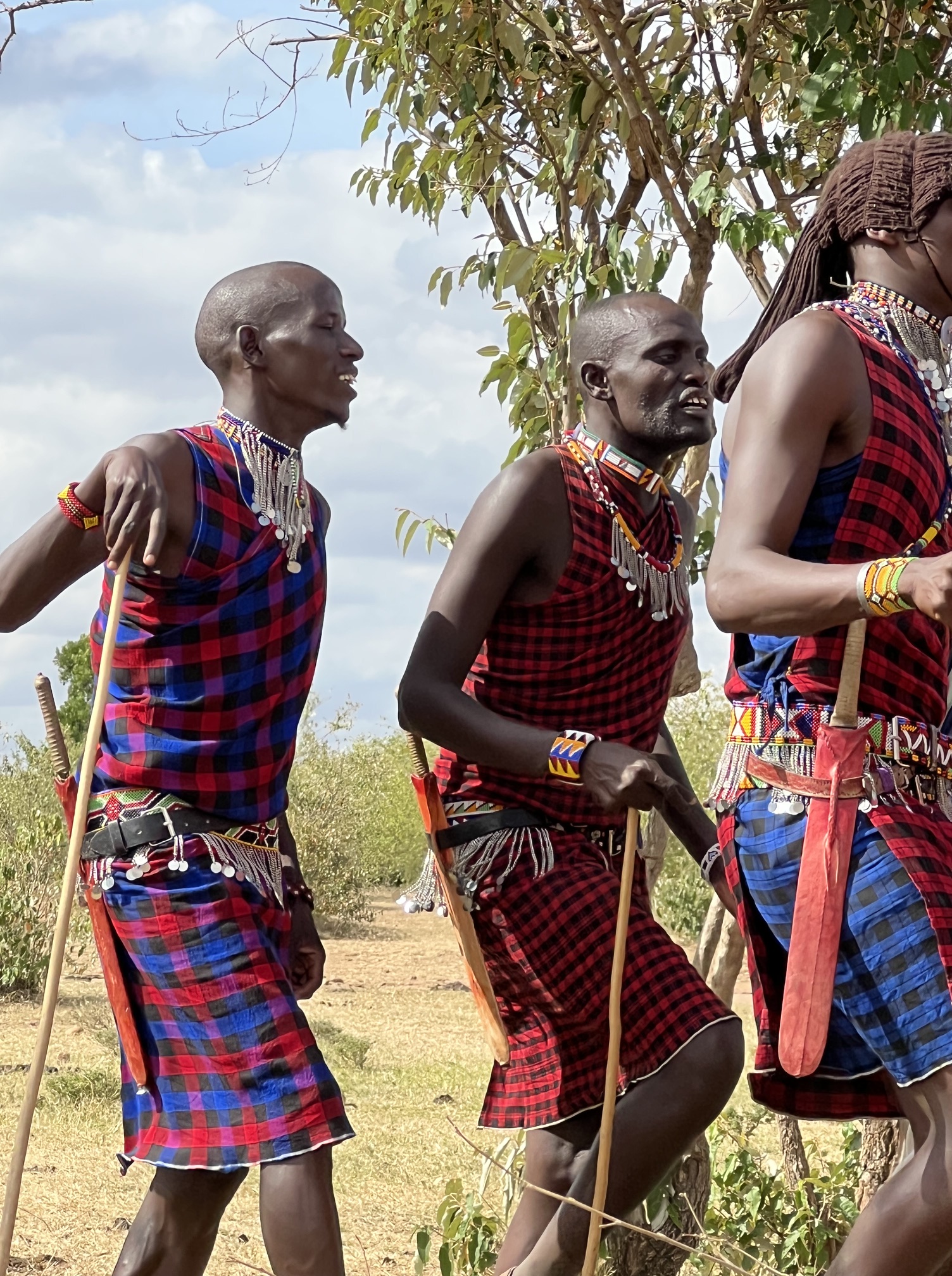
Naturally, I decided I needed one. Or, more accurately, twenty.
I told the group I’d be honored to buy a used panga—emphasis on used. I didn’t want some shiny, fresh-off-the-shelf imposter. I wanted history. Character. Rust, ideally. My only request was that the owner write their name on the scabbard with my Sharpie, because nothing says “cultural exchange” like permanent marker.
The next morning, a young man showed up at my tent carrying a rolled canvas bundle tied with cord. Inside? Not one knife. Not two. Twenty. Twenty beautifully worn Maasai blades, each tucked into its red impala-skin sheath, each labeled exactly as requested. It was like Etsy, but with significantly more edge.
At that moment, I experienced two emotions: delight and immediate financial concern.
I had made a promise to buy a knife, not open a small cutlery museum. But a deal is a deal. I scraped together the money, and one by one, the men left my tent happily counting their shillingi ningi—which I believe translates roughly to “this Mzungu definitely overpaid.”
These days, the blades themselves are manufactured to standard sizes, unlike the old days when tribes would forge weapons from whatever scrap metal they could find—railway spikes, wire, probably the occasional unlucky bicycle. But once those blades reach the village, that’s where the real craftsmanship begins. They’re sharpened down into long, lethal, sword-like tools. The sheaths are hand-stitched from goat or game hide, dyed a deep red to match the flowing shuka garments. Handles are wrapped in leather, sometimes even fur—because if you’re going into battle, you might as well have a comfortable grip.
Over time, with constant sharpening, these blades wear down into narrow, razor-sharp slivers of steel. I like to imagine the stories they carry—guarding cattle from lions and leopards, long nights in the bush, successful hunts… and probably the occasional argument over whose turn it was to bring snacks.
I eventually made it home with my haul. A few knives were “liberated” from my checked luggage somewhere along the journey—apparently airport baggage handlers also appreciate a good blade—but I still ended up with an impressive collection. I’ve given many away as gifts, which is a great way to confuse friends and family.
But I kept one.
An old, worn-down blade with an impala fur handle that fits perfectly in my very un-Maasai, dish-soap-soft hands. This particular panga has traveled from the wilds of East Africa to the back seat pocket of my Mercedes Sprinter van—arguably a less dramatic environment, though still occasionally dangerous when snacks run low.
It’s gone from lion defense to campfire duty, mostly splitting kindling. The only flesh it’s cut recently is mine, during an ill-advised attempt to casually swing it around camp and impress my wife.
She was not impressed.
In fairness, I was missing one key element: a flowing red shuka. That, and any actual skill.
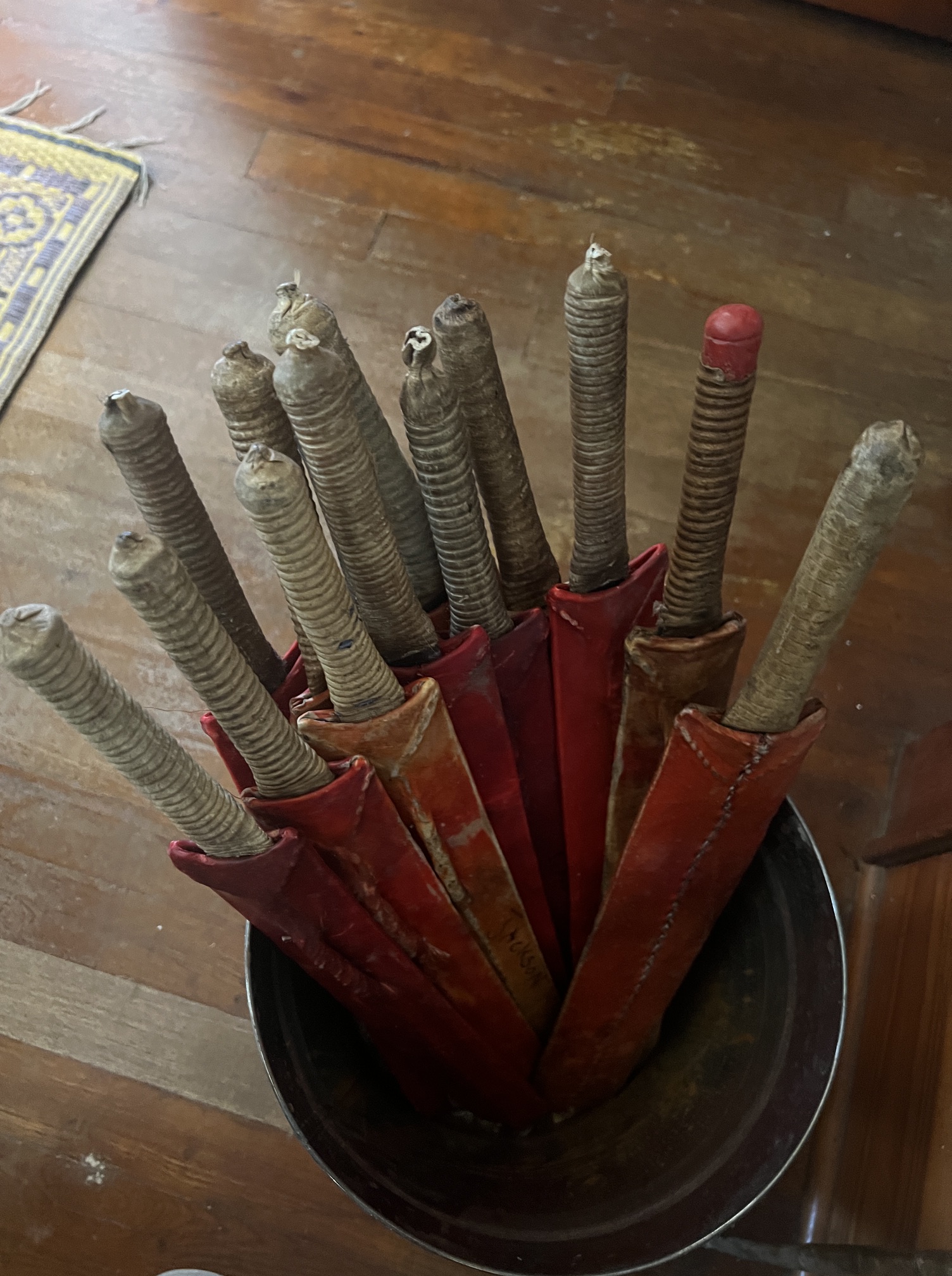
A Sentimental Journey of a Maasai Panga
Copyright © 2026 by D. Jason Miller
All rights reserved. No part of this publication may be reproduced, distributed, or transmitted in any form or by any means, including photocopying, recording, or other electronic or mechanical methods, without the prior written permission of the publisher, except in the case of brief quotations embodied in critical reviews and certain other noncommercial uses permitted by copyright law.

