Jason Miller
Never in my life have I met heat like the lower Amazon basin. And I don’t mean “Houston in August, wow it’s sticky” heat. I mean Houston in August… after it’s been personally insulted and decided to take revenge. Triple it. Then wrap it in a wet towel.
The moment you step off the plane—whether it’s a jungle airstrip or a seaplane kissing the river, you don’t walk into the air so much as collide with it. It’s like opening an oven door and finding out the oven has feelings. Angry ones. Within minutes of unloading luggage and waterproof bags stuffed with gear, you’re sweating in places you didn’t know had pores. Sweat becomes less of a reaction and more of a lifestyle.
As the little float plane buzzes off toward Manaus, shrinking into the distance and taking your last chance at air conditioning with it, a thought creeps in: What kind of idiot signs up for this?
Answer: this idiot. And I’ve got fifteen days to prove it.
The lower Amazon, east of Manaus, sits barely above sea level, which means the heat and humidity don’t just visit, they move in, unpack, and refuse to leave. With daily rain thrown in for good measure, the whole place feels like a planet-sized sauna where someone broke the “off” switch.
Before dawn, the river villagers are already out—fishing, hunting, getting things done before the sun wakes up and chooses violence. By mid-morning, they’re heading back, prize in hand, fully committed to spending the rest of the day expending as little energy as humanly possible. It’s not laziness, it’s strategy. Out here, overachievement leads to heatstroke.
At sunrise, the river is calm and beautiful, wrapped in mist as temperature and dew point shake hands like old friends. It’s almost peaceful—almost. Because not long after, the sun rises like a flaming tyrant and burns off any illusion that today might be tolerable.
I have nothing but respect for the river people. They are, without exaggeration, built differently. I’ve always considered myself tough—Africa, South America, harsh projects, bring it on. But by day four? I’m mentally drafting my resignation from existence. Sleep-deprived, chugging warm, vaguely suspicious “filtered” river water, and dining on whatever the jungle felt like giving up that day—I’m hanging on by a thread.
And yet, somehow, humans adapt. It’s what we do. Give us enough time and we’ll normalize just about anything, even living inside a damp oven while being slowly nibbled by insects.
Reading old explorer journals hits differently now. Those black-and-white photos of men in full leather boots, safari jackets, ties, and pith helmets? That’s not fashion—that’s insanity with a dress code.
I’ve tried everything to escape the heat. Walking creates a breeze, sure—but also turns your body into a self-basting roast. Shade? Nice idea, except every insect in the Amazon had it first. The second you step in, it’s like you’ve walked into a very exclusive, very hungry club.
You’d think the river would be the answer. Cool, inviting, right there. Absolutely not. That water is less “refreshing dip” and more “choose your nightmare.” Piranhas, caimans, and the infamous candiru—Google it if you’re feeling brave or if you never want to swim again. So unless your plan is to stand ankle-deep on a muddy bank and splash yourself like a reluctant toddler, the river is off the menu.
Evenings bring hope. The sun dips behind the trees, and sometimes a storm rolls in, drenching everything in warm rain that somehow still feels like a blessing. Unless it rains too hard—then you’re crammed into a wooden hut with worse airflow than a sealed Tupperware container, just marinating in your own existence while waiting it out. I’ve seen it rain for days. Not “on and off.” Just… on.
After sunset, the village comes alive again. People cook, talk, move. The heat doesn’t leave—it just stops shouting quite so loudly. But the insects? Oh, they’ve been waiting. Mosquitoes, flies, moths—an entire airborne army clocking in for the night shift, all deeply committed to making you their next meal.
Eventually comes the evening “shower”: a tank of pumped river water hanging above a wooden platform. It’s refreshing in theory. In reality, it’s warm, slightly slimy, and about as satisfying as being gently rinsed by disappointment. And because nothing in the Amazon happens without witnesses, the insects show up for that too. Turns out, they love a captive, naked audience.
Clothes go back on fast—even damp, smelly ones—because dignity is negotiable, but being eaten alive is not.
I always ask to sleep outside in a hammock, which confuses the locals. They prefer the huts. I prefer not being sealed inside a tin-roofed oven hitting 115 degrees with full humidity, packed wall-to-wall with hammocks and restless bodies. Inside, every movement generates heat. It’s like sleeping in a crowded toaster.
Outside, in my hammock, wrapped in a mosquito net and rain sheet, the nightly battle begins. I lie on my back as sweat pools in my neck and chest, listening to the constant hum of insects—the Amazon’s version of white noise, if white noise wanted you dead.
Eventually, exhaustion wins. I drift off for a few precious hours.
Predawn is the “coolest” part of the day—and by “cool,” I mean Houston in August dialed down from “apocalyptic” to “merely oppressive.” Then the sun rises again, peeking over the wall of forest like it’s excited to ruin your day.
And just like that, the whole beautiful, brutal cycle begins again.
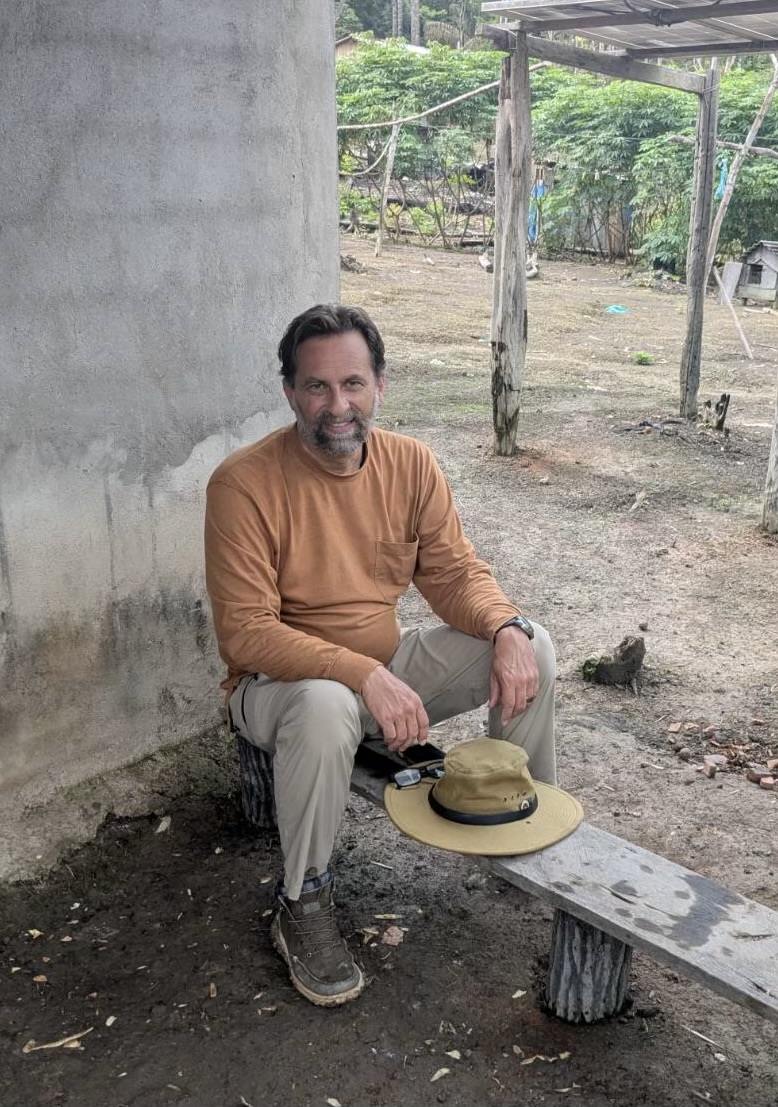
Surviving the Amazon Heat
Copyright © 2026 by D.Jason Miller
All rights reserved. No part of this publication may be reproduced, distributed, or transmitted in any form or by any means, including photocopying, recording, or other electronic or mechanical methods, without the prior written permission of the publisher, except in the case of brief quotations embodied in critical reviews and certain other noncommercial uses permitted by copyright law.

