Jason Miller
There’s an old saying that 40% of the world’s first glimpse of a car was a Land Rover. That might not be statistically accurate—but emotionally, it feels right. If you’ve ever watched a grainy wildlife documentary, chances are there’s a dusty Land Rover Series II puttering across the savannah with a guy in short shorts and a questionable mustache.
Then there’s the other saying: 75% of all Land Rovers ever built are still on the road… the other 25% made it home.
Since 1948, Land Rovers have gone everywhere. They crossed continents, mapped jungles, and carried explorers on trips like the Oxford and Cambridge Far Eastern Expedition from London to Singapore. They didn’t just explore the world—they got stuck in it, repeatedly, with style.
Enter the quiet overachiever: Toyota.
In the 1950s, while Land Rover was busy becoming a global icon, Toyota showed up with the Toyota Land Cruiser. The FJ40 jeep and later the Toyota Land Cruiser FJ55—vehicles with all the charisma of a hammer and roughly the same personality. They weren’t glamorous, but they had one radical feature: they kept working.
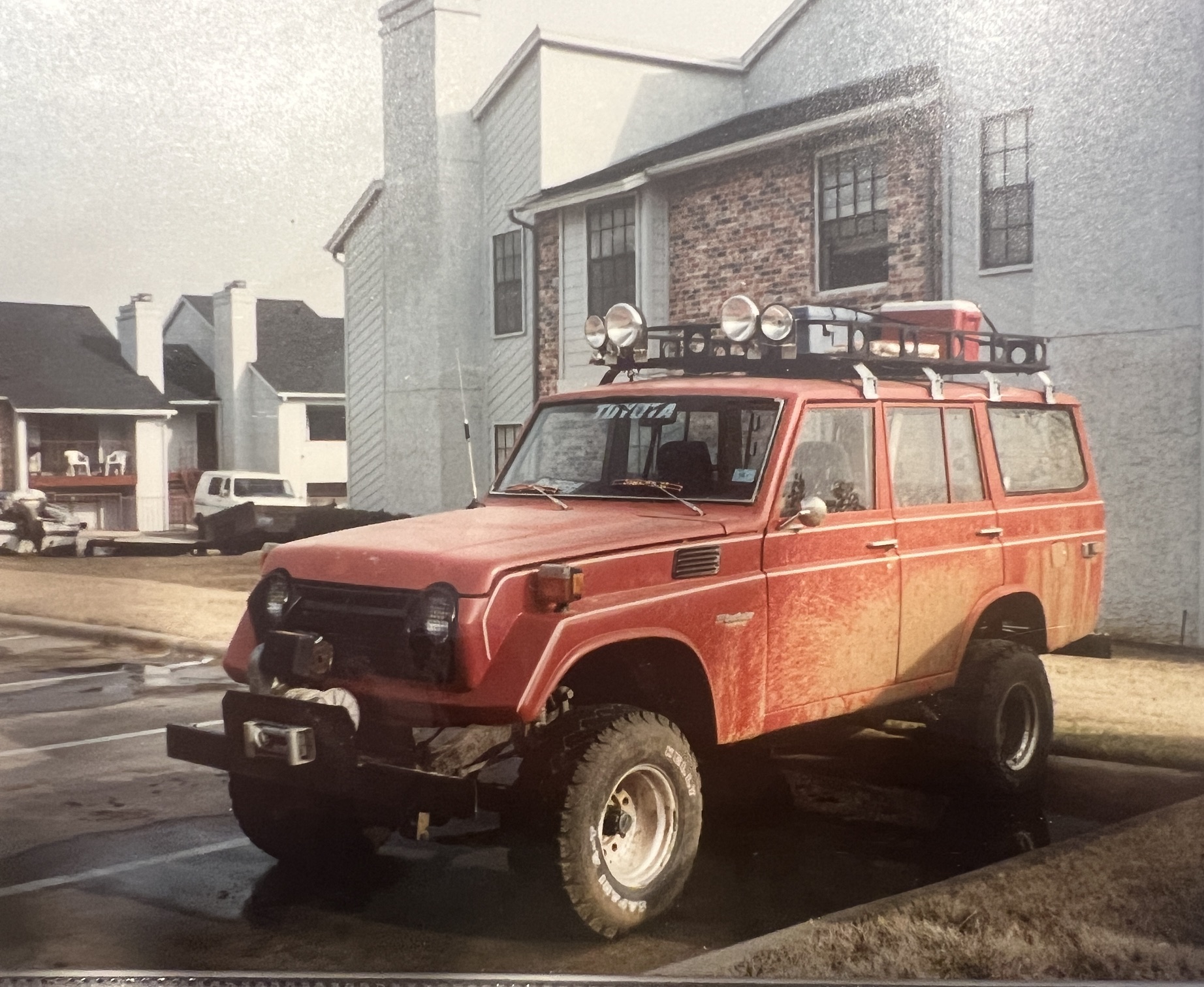
Sure, they rusted like they were paid to, but mechanically? Indestructible. Toyota engineers apparently asked one simple question: “What if it never broke?”—and then just… did that.
Meanwhile, Land Rover engineers asked, “What if we made it more interesting?” and history has been answering that question ever since.
Fast forward a few decades, and the world has quietly made its choice. NGOs, safari companies, and anyone whose survival depends on turning a key now drives the Toyota Land Cruiser 70 Series. It’s not because they don’t love Land Rovers—it’s because they do love getting home.

That said, the romance of Land Rover is alive and well. Restored Defenders and Series trucks still turn heads. And places like Foleys in Nairobi are doing their part to keep vintage Land Rovers on the roads, and off, in East Africa. Park one next to anything else and it wins the beauty contest every time. It’s the difference between a vintage leather jacket and a Gore-Tex rain shell—one looks incredible, the other keeps you alive.
I’ve owned both, so I’ve had the full emotional experience.
I learned to drive at 14 in a 1967 Land Cruiser with “three on the tree”—a vehicle that felt like it could survive a meteor strike. Later I had an FJ55 that refused to die, despite what I put it through.
Then came a 1989 Range Rover Classic, which—true to form—eventually expressed its individuality by ceasing to function entirely and requiring a tow of shame, to the wrecking yard.
In the late ’90s, I had a 1974 Land Rover 109 called “the Donkey.” It carried me across Southern Africa, broke down in Swaziland, and doubled as my house on the Limpopo River while I waited for border clearance. It was less a vehicle and more a lifestyle choice.
Today, I run multiple Land Cruiser 70 Series trucks for work. They start, they run, they don’t complain. It’s almost boring.
And sitting in my driveway in Colorado is a 1993 Land Rover Defender 110—beautiful, iconic, and just unpredictable enough to keep things interesting.
So here’s where I’ve landed:
If I want to look like an explorer, I’ll take the Land Rover.
If I actually need to survive the expedition, I’ll take the Land Cruiser.
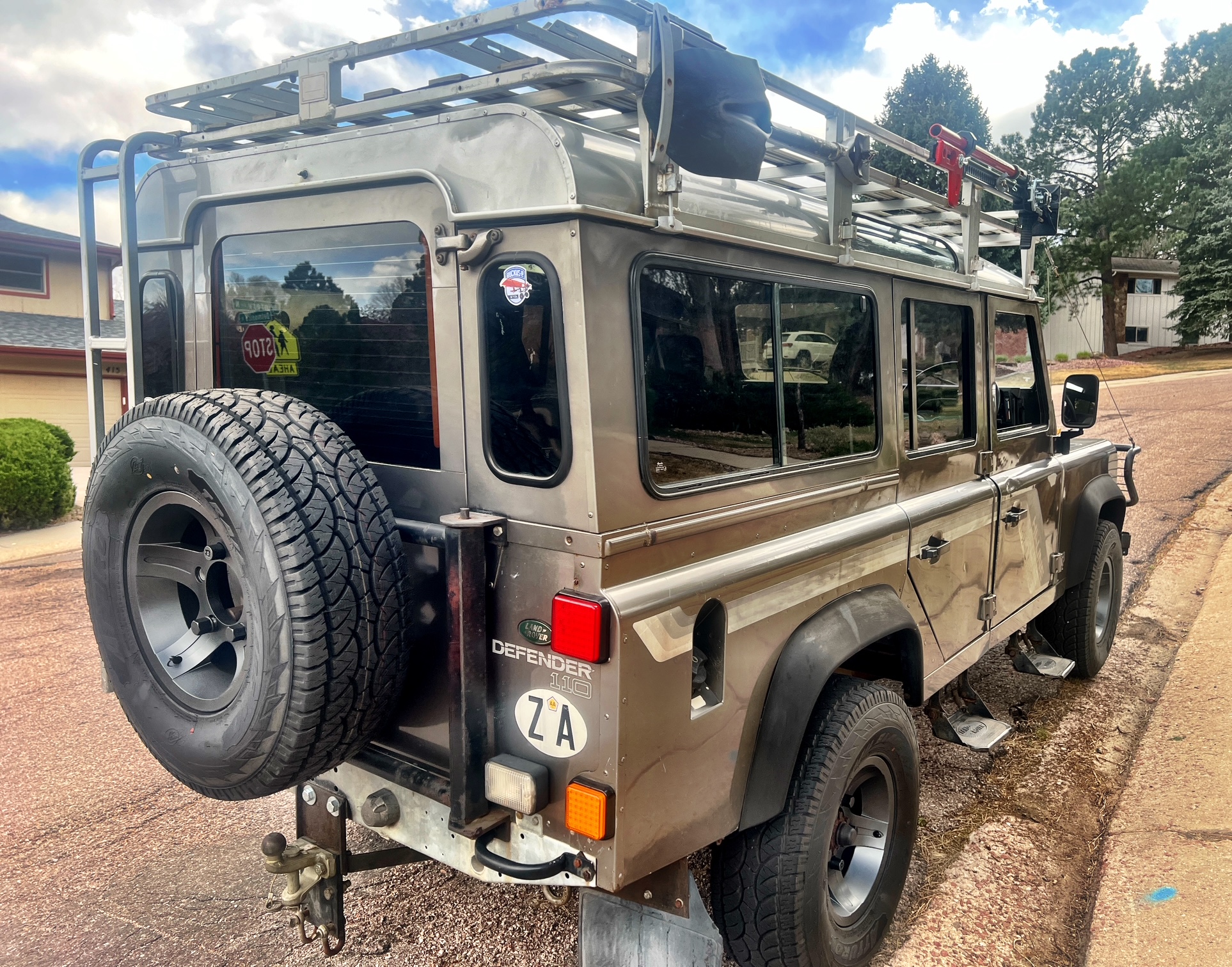
Land Rover vs Toyota: Iconic Choices for Adventurers
Copyright © 2026 by D. Jason Miller
All rights reserved. No part of this publication may be reproduced, distributed, or transmitted in any form or by any means, including photocopying, recording, or other electronic or mechanical methods, without the prior written permission of the publisher, except in the case of brief quotations embodied in critical reviews and certain other noncommercial uses permitted by copyright law.

