The sound of Africa is not the thundering rumble of a distant lion, nor is it the hollow trumpet of a bull elephant. If Africa has a voice, it is the hyena…From the first, faraway woooo-uppp of the pack gathering to the sniggering chitter of the kill, the hyena is telling you something you don’t want to be reminded of: you’re just meat after all and your day will come.
– Peter Hathaway Capstick, Death in the Long Grass
Walking along the busy path five-year-old Njoroge Gitau was tasked with hurrying to the local market to purchase some vegetables for his mother to prepare dinner later that evening. The Kenyan evenings are short, and sun was setting to the west but that didn’t matter to young Njoroge, who has travelled this well-worn path to the local roadside market many times. This path is very well travelled littered with trash and plastic bottles along the way and people always in sight, however this evening all eyes were on Njoroge.
As the sun rapidly set as it does along the equator, Njoroge was being watched from the darkness of the surrounding bush, not heavy bush but scraggly bushes and stripped trees, little cover is left in a heavy urbanized area such as this. Every step Njoroge made was carefully analyzed and every stumble a chance to pounce, but many other people were about, adults, women carrying bags of produce, bicycles overloaded with firewood and other items. But patience is a strong point of the ‘fisi” or Hyena as we know it.
As darkness fell the fisi attacked like a flash, in a matter of seconds the young five year old was swept off his feet and carried off into the bush in an instant. No amount of screaming or struggling could stop the drama that was unfolding and poor Njoroge took his last breath in the jaws of a hyena leaving grieving parents and a community in despair.
This was the third fatal hyena attack this month (September 2024) and the following morning the community threatened riots if the Kenya Wildlife Service didn’t put and end to this.
According to residents in the area clans of hyenas have been raoming the villages including Nyacaba, Maraba, Athi, Jujafarm, Muthaara, Magomano, Kiahuria and Mukuyu wreaking havock and terrorizing resedents. The threat has become so severe that schools are opening after 8:00am and closing at 4pm so children can get home before dark.
Interestingly enough this is a pretty rare occurrence these days, especially in a very well populated country such as Kenya but the past two years these Hyenas have claimed many lives including children and the elderly, and I decided to explore into this particular pack of hyenas in this particular region to try to find some answers.
On a cool August evening Esther (Not her real name) did not arrive home alarming her family. Esther was a proud businesswoman owning and operating a “kibanda” or food Kiosk only four kilometers for the busy Thika Highway. Her family and friends sat worried all night calling around looking for Esther. The following morning enquiries found that Esther had left her kiosk at dusk to purchase cabbage and other supplies for her business and never returned home.
Authorities were on the scene at first light and a search revealed the sad news that she had perished by the jaws of the Hyena.
Her belongings were scattered just a few meters from the attack site and the Hyenas devoured her head, stomach and waist leaving her body and belongings in the hot African sun. Her family is currently seeking legal action against Kenya Wildlife Service who they claim continues to put wildlife above the lives of the local population.
Today the town of Juja and Thika are large industrial cities, once filled with wildlife and adventure for the people of Nairobi who used to travel the 30 kilometers to hunt and camp in the bush, this area has been over developed with the population explosion of the past 20 years and sadly most wildlife has been destroyed as well as the flora and fauna and now the visitor is surrounded by concrete high rise structures and apartments and a endless sea of markets and people. I work for an organization just east of Thika on the Garissa highway and have spent a large amount of time in the region and have studied the human /wildlife conflict in depth.
What makes the Hyenas of Juja slightly more complicated is the belief they are evil spirits or witches and attacking these innocent people due to magic or a spells being cast. As a matter of fact the name Juja is surrounded with superstition in itself.
Originally the area was called “Weru Wa Ndarugu” The Ndarugu plains translated from KiSwahilli. The fascinating story is as follows.
Born in 1872 William Northup McMillan in St Luis Missouri to a wealthy family and like most young wealthy men of the day he was enthralled with adventure and roamed the globe searching what is beyond the next hill like some of us do.
His first adventure to Africa was with the Ethiopian expedition to search the Blue Nile to verify if it was navigable to its source and was awarded two medals from Emperor Menelik for his work.
William’s adventures took him all around the world, he ranched cattle in New Mexico and Texas in the United States, invested and worked the oil fields of Romania and even invested in Malaysian Rubber plantations. He explored the coasts and inland water ways of West Africa visiting remote tribes. He had a keen interest in superstition and witchcraft that was commonly practiced by the local tribes and once meeting a chief in a remote village was given two small fetish statues to bring “good luck” and “safety” on his voyage over the sea. He was told if he didn’t protect and cherish these statues he would perish at sea.
The chief also told him the statues were each named, one was Ju and the other Ja, not thinking much of this other than the novelty William packed them away and safely transported them on his adventures.
We have all heard the term Juju as a term used to describe witchcraft and the exact definition is an object that has been deliberately infused with magical power. Juju is still practiced regularly in Africa and still has a very strong influence in Western African countries such as Benin, Togo, Ghana and NIgera. Some believe the word JuJu is from the French word Joujou (Plaything) but I would imagine the Hausa word juju described as a fetish probably makes more sense as the French were new to the area during Williams visit to West Africa.
Like many, young William fell in love with Africa and decided to settle in British East Africa also known as the Kenya Colony.
Arriving in British East Africa on September 14th 1904 exactly 120 years to the month before the death of young Mulwo, William and his wife Lucie boarded the famed Uganda Railroad in Mombassa and worked their way to the shiny new thriving town of Nairobi. Here they began searching for their new home.
At that time the area north of Nairobi was a vast open land filled with wildlife and adventure and the Mcmillan’s decided to purchase 19,000 acres along Thika road north of Nairobi. Settlers were only allowed to purchase 5,000 acres from the crown and there were strict regulations and rules in regards to land ownership.
One evening while going through the large crates of personal effects William finds his old friends Ju and Ja wrapped carefully in straw in a wooden crate, thinking little of it, he placed them on the mantle and went about the paperwork and to his surprise he was allowed to go through with his requested purchase of 19,000 acres (6100 Hectars). He immediately, as more or less a joke, attributed his success to his magic statues and promptly named his sprawling estate Juja.
William may have thought it a joke to attribute his success, which was many in his life to Ju and Ja. However, the locals found it terrifying and the presence of the statues on his estate caused havoc amongst the locals who take such things very seriously.
The land was thought to be cursed and locals stayed away, probably to the liking of William in all honesty. On a side note, on May 28th 1909 Juja was one of the sprawling ranches Theodore Roosevelt and son Kermit hunted as guests of Mr. and Mrs Mcmillan commenting on them in his excellent book African Game trails as excellent hosts as well as the thriving wildlife in the area. Winston Churchill was also a regular guest to the farm.
After the death of William McMillian at a young age of 52, due to the feared reputation of the ranch and rumors of death and bad luck Lucie found the idols and taking them to a private area in the Ndarugu valley close to Thika town buried them deep in the earth to put an end of the idols. And as they say, history became legend, and legend became myth, yet knowledge remained as the town became known as Juja named from the sprawling farm hence named from two west African idols that traveled via sea through peril and adventure to be buried in a secrete place.
In the year 1967 the eastern part of the farm was procured and turned into a national park. Named from the solitary 7,037 foot mountain called Ol Donyo Sabuk (large mountain in Maasai) the Ol Donyo Sabuk National Park is home to baboons, monkeys and an array of antelope and birdlife and some say an overpopulation of rouge Hyenas. On a side note both William and his wife Lucie are buried near the summit of Ol Donyo Sabuk.
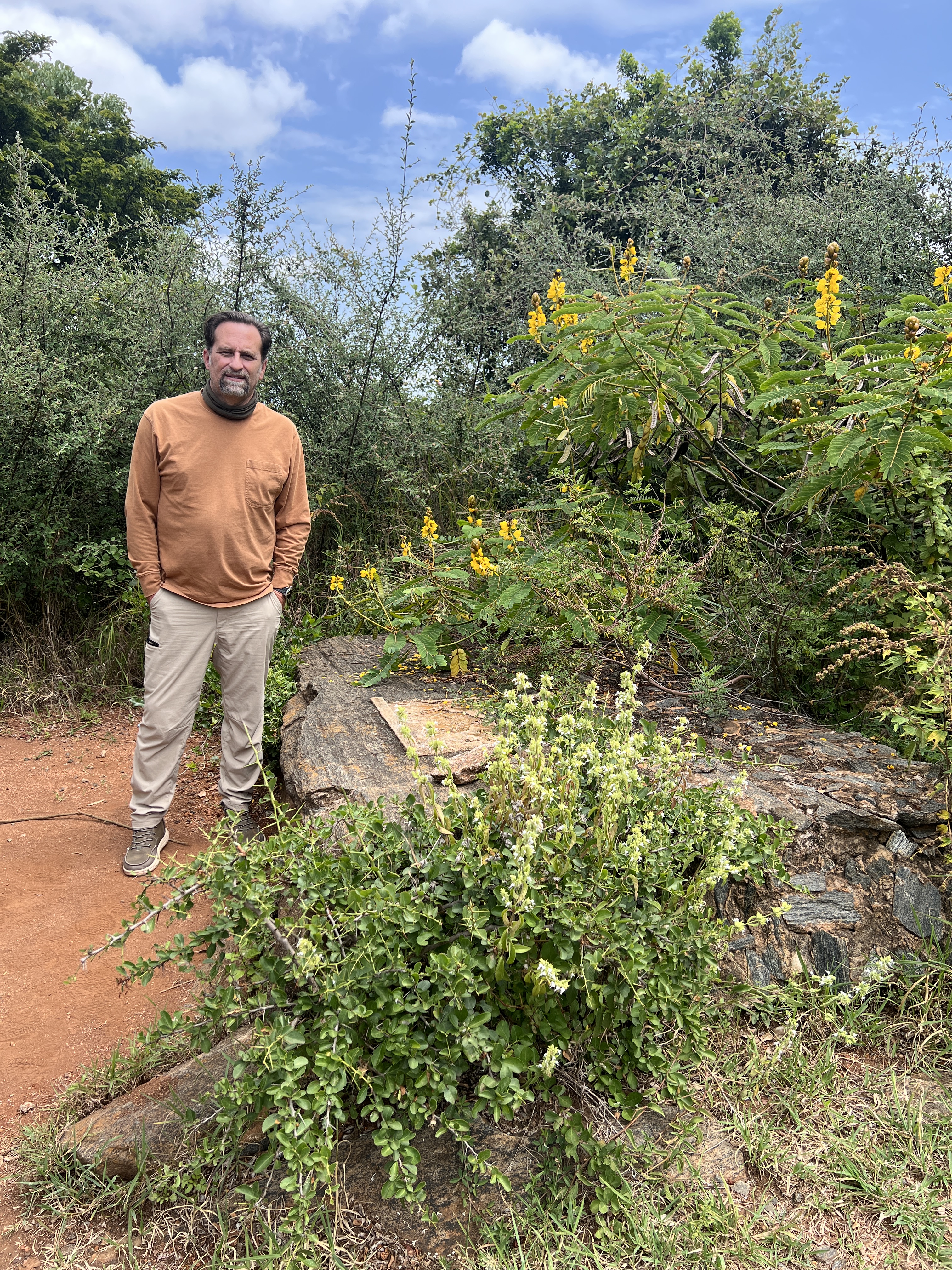
Maneaters and mankillers were once commonplace in the new Kenya Colony but as the wildlife was slowly killed off and pushed into small parks and sanctuaries most Kenyans have never even seen a wild animal. I being greatly interested in wildlife and a history buff spend some of my time while working in Kenya researching current day wildlife / human conflicts and some would be very surprised at how common we find wildlife hunting humans even in urban areas such a Juja.
Sadly, wildlife has little choice as city surrounds it cutting off its natural food supply, any small antelopes’ rabbits or other natural prey are poached off immediately leaving a few predators to make best of carrion or an occasional cow or pet dog, eventually they escape or are killed as well. But the Fisi’ is a different animal one of the most haunting and versatile creatures, able to live off scrap, dead animals, trash and can survive days without food altogether.
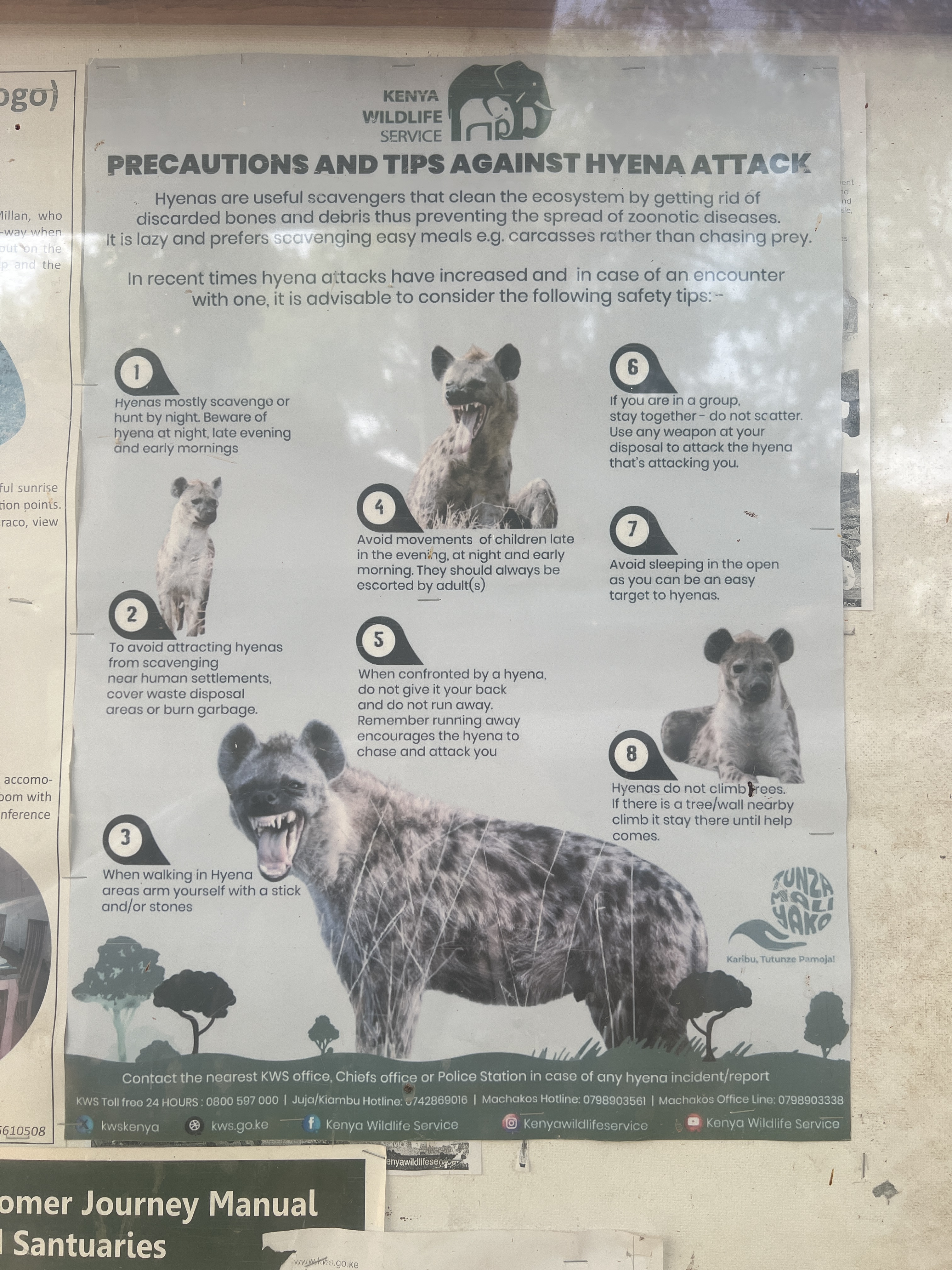
Hyenas or “Fisi” in Kiswahili right or wrong has always been depicted with negativity, a dangerous cowardly creature, laughing and hooping all night while searching for its next prey. African folklore paints the hyena as everything from witches to ancestors and where they are prevalent the night sounds of Hyena are very unsettling albeit fascinating. When staying at a friend’s camp in the Nyae Nyae conservancy in rural Namibia we always leave scraps in the bush for the Hyenas and then while sitting around the fire listen quietly as they call for their friends to come share in the feast, bones cracking and constant fighting with each other over the scraps of food. And a night in a bush camp would never be complete without the serenade of hyenas to send one off to sleep from the false sense of safety of a bush tent.
The Mbugwe people of the Manyara region of Tanzania believe every witch (witch doctor) owns multiple hyena to do their dirty work, they are referred to as “night cattle” and supposably branded by their owners. Wild Hyenas have been found killed with beads woven into their fur which to the locals confirms these stories. They also believe the witches ride the hyenas and mounts them at night to terrorize the countryside arrive back before dawn. It’s believed that a child born at night while hyenas are about will grow up to be a thief or undesirable person. Also, Hyena feces are known as a strong medicine allowing children to develop faster and it’s been known that parents will put Hyena feces in children’s clothing.
The Mbugwe will not kill a Hyeana for fear of retribution from its owner and when one is accidentally killed its quickly dismembered and buried in multiple places to scatter any marks or characteristics to tie to an owner.
As one can see, life in the bush is complicated with the Hyeana and living in fear of them is common as it is with most night creatures.
In Ethiopia It was traditionally believed that blacksmiths can also be wizards or witches with power to turn into Hyenas where they would rob graves at night (a common practice for wild hyenas as they eat carrion, and some tribes simply drag the dead into the bush as apposed to burring them deep enough to discourage scavengers)
Countries such as Chad, Morroco, Sudan, Mali and many others all have similar beliefs that humans can transform to Hyenas and terrorize the regions under the veil of darkness.
Truthfully the lowly Hyeana is very much a valuable addition to the ecosystem, they are the trashmen of the bush cleaning a path wherever they travel, they are usually the final chapter of a lions life as well as other creatures they do not tangle with under normal circumstances.
They are powerful hunters, I have seen a pack of Hyenas dispose of a whole zebra in less than an hour leaving nothing but a red patch on the veldt.
Lets back up a bit, Lucie sold off the Juja farm and human encroachment began replacing once thriving wild lands with a modern city.
Juja is now a thriving city with several industries including plasic and paper plants and contains a growing population of 160,000 people and has even been annexed into the every expanding city of Nairobi.
Due to lack of zoning and city planning the area is growing out of control with large concrete apartment buildings under different phases of construction lining small dirt roads and paths throughout. Markets line the streets and the population is active what seems like 24 hours a day.
Due to the area’s growth and over all growth of the country there is an increasing need to stone and concrete so quarry’s have popped up all around the Juja and Thika area, large tractors and equipment demolish the earth into huge pits, some covering over 80 acres, where the stone is removed from and transported elsewhere. Once these quarries have been depleted, they are abandoned to be filled with trash, and slowly mother earth does her best to reclaim that land and soon large puddles of water form starting a breeding ground for disease and mosquitos, the rocky caves and crevices become homes for animals and vegetation begins to grow where it can.
Part 2 coming soon
 Jason Miller (Kyalo)