From my journal June 2001- Jason Miller
The road north to Nalerigu felt endless, a ribbon of red dust cutting through dry villages and scattered bush beneath a blazing Ghanaian sun. By the time we arrived, the heat clung to everything — our clothes, our skin. Yet despite the exhaustion, and a respetory infection I carried from Germany, there was something magnetic about the place. Northern Ghana moved at a slower rhythm, one measured not by clocks but by the rising and falling of the sun, the distant beating of drums, and the routines of village life.
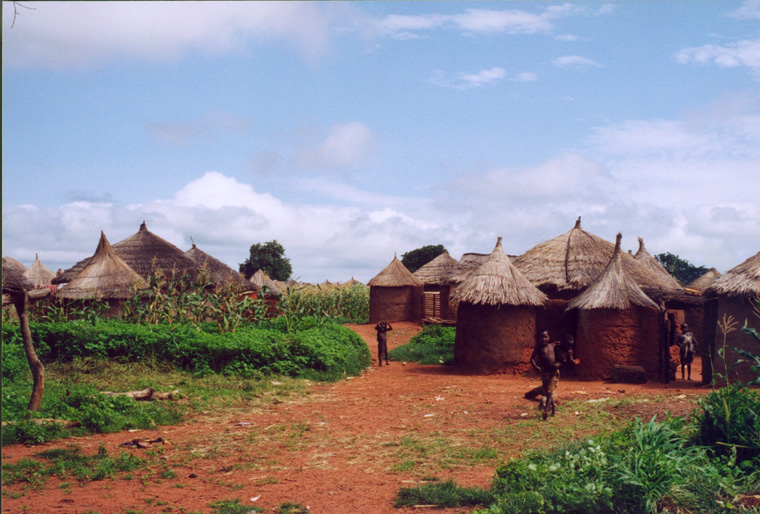
A few days later we traveled farther out to a remote village called Samni. The village seemed almost untouched by the modern world, its round mud huts topped with thatched roofs clustered together in dusty compounds. Upon our arrival, Chief Gabangudana welcomed us warmly and offered us a place to stay within a traditional compound.
Our living conditions were simple and shaped entirely by the structure of the village itself. We stayed inside a circular mud-walled enclosure — a kind of boma — which formed a protective ring around several small inner huts. Each hut served a different purpose: one for sleeping, one for storing belongings, and a separate small cooking hut where food was prepared over open fire. The floors were packed earth, the walls thick mud, and the air carried the constant mix of smoke, dust, and sweat. Nights were quiet except for distant drums, animals moving outside the compound walls, and the occasional wind brushing through the thatch.
We were not entirely on our own during our stay. A local woman remained with us throughout, assigned to help prepare our meals. She cooked over the open fire in the small kitchen hut, working patiently with basic ingredients — millet, rice, yams, vegetables, and whatever protein the village could provide. Meals were simple but nourishing, and always prepared with a sense of care and routine that made the compound feel lived in rather than temporary. Her presence also gave structure to our days, as food was often ready with the rising sun or just after the heat of midday began to ease.
As we settled into the village, I began noticing signs of spiritual practices unfamiliar to me. Near the center of the wider settlement stood several small earthen altars darkened by old sacrifices. They were stained with dried blood and surrounded by scattered chicken feathers that shifted in the wind. Around some of the shrines hung cords threaded with tiny skeletal remains of animals, their bones rattling softly whenever the evening breeze passed through. At night, illuminated only by firelight and the glow of the moon, the place carried an eerie atmosphere that was difficult to shake.
Within the same cultural landscape, we were also told of the village queen, a figure spoken about with deep reverence and distance. According to local accounts, her remains were kept in a sacred inner hut, away from public view, preserved in a way that marked her extraordinary age and spiritual significance. Few people were ever allowed to enter that space, and even fewer spoke of it directly, as it was considered part of the village’s most protected ancestral traditions.
Part of my visit also became focused on trying to better understand the local language, Mampruli or Mamprussi. I spent considerable time listening carefully to conversations, noting down common words and phrases, and slowly building a very basic translation guide into English. It was painstaking work, often relying on repetition, gestures, and context, but it became one of the most meaningful parts of my stay. I hoped that even a simple phrasebook might one day help future travelers move through the region with greater understanding and respect.
One evening became the highlight of my journey. As darkness settled across the village and the stars filled the enormous African sky, everyone gathered in the open clearing near the compounds. Fires crackled softly while the elders beat drums in rhythms that echoed across the savannah. Men, women, and children danced barefoot in the dust, their movements hypnotic in the flickering firelight. The music felt ancient, as though it belonged to the land itself.
Later that same night, after the dancing had quieted and the drums faded into the distance, many of the villagers remained seated around the fire with us. The children pressed close while the elders listened silently. Someone asked how we had traveled from our country to Ghana, and when I explained that we had arrived in a giant airplane, the group stared back at me with fascination and disbelief.
Trying to explain an aircraft in a place so far removed from airports and cities felt almost impossible. I pointed upward into the night sky where, far above the village, a tiny blinking light moved slowly between the stars. “Like that,” I said, tracing its path with my finger.
The children laughed and whispered while the older men shook their heads in amazement. For nearly an hour we sat there beneath the stars exchanging stories, each of us trying to imagine the other’s world. In that moment, the distance between our lives felt enormous, yet around the fire there was also a strange sense of closeness.
Still, village life came with its challenges. Foreign travelers almost never passed through this region, and our presence attracted constant attention. Everywhere we went, people followed us with quiet curiosity, observing even the most ordinary actions. Privacy was rare, and daily routines often felt like they were unfolding in public view.
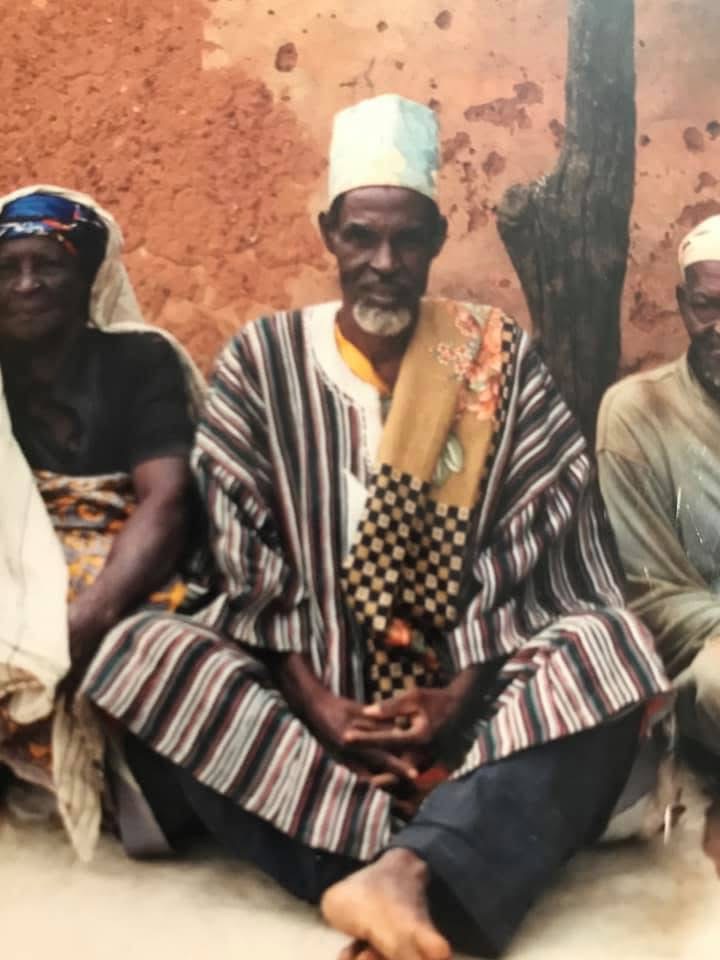
I had the opportunity to meet Chief Gabangudana twice during our stay. Visiting him required observing local customs: bowing respectfully, clapping softly, and repeating the greeting “naa, naa, naa” before he would formally welcome us. He carried himself with quiet authority but was surprisingly warm and approachable. I learned that he was the eldest child of the village queen, who had reportedly died at the extraordinary age of 145 — though in these villages, time and exact dates are often remembered more through stories than calendars.
As my journey through Ghana came to an end, I found myself reflecting on everything I had seen — the beauty of the northern landscapes, the generosity of people who had so little, the deep traditions still alive in remote villages, and the sense of stepping briefly into a world far removed from modern life. Everywhere we traveled, people treated us with kindness and curiosity, offering help whenever they could and welcoming us openly into their homes and communities.
Long after leaving Samni, I still remembered the sound of drums beneath the stars, the quiet rhythm of life inside the mud-walled compound, and the sight of that tiny blinking light crossing the night sky while villagers listened in wonder to stories of a world far beyond the savannah.
Samni- A village in Northern Ghana
Copyright © 2001 by Jason Miller
All rights reserved. No part of this publication may be reproduced, distributed, or transmitted in any form or by any means, including photocopying, recording, or other electronic or mechanical methods, without the prior written permission of the publisher, except in the case of brief quotations embodied in critical reviews and certain other noncommercial uses permitted by copyright law.

